Agile Project Management:
Methodologies

Learn about Agile project management methodologies, best practices, and how to transition from traditional to Agile approaches.


Table of Contents
Share This Article
Introduction to Agile
Agile project management is an adaptive approach toward managing projects that focuses on flexibility, collaboration, and customer satisfaction.
Agile project management focuses on delivering value to the customer in an iterative and incremental fashion.
The agile approach help organizations respond to changing market conditions and customer needs.
Learn more about Agile Project Management join PMI-ACP BootCamp.
Some of the key Pillars of agile project management include:
Focusing on customer satisfaction: The customer should be involved throughout the project in order to ensure that their needs are being met.
Delivering value incrementally: Rather than trying to deliver a complete product all at once, agile projects focus on delivering value in small increments. This allows customers to provide early feedback and helps ensure that the final product meets their needs.
Embracing change: Agile project management recognizes that change is inevitable and should be embraced rather than resisted. This allows the project to adapt as needed to ensure that the customer's needs are still being met.
Collaboration: Agile project management relies on collaboration between the different stakeholders in order to be successful. This includes the customer, the development team, and the project manager.
Flexibility: Agile project management is flexible in nature, which means that it can be adapted to fit the specific needs of a project. This allows for a more customized approach that can better meet the needs of the customer.
Agile project management can be used in a variety of different projects, including software development, product development, and even business process improvement. It is a popular choice for many organizations because it can help to improve customer satisfaction, deliver value faster, and increase collaboration.
A Brief History of Agile Project Management
Agile project management has its roots in the software development world. In the early 2000s, a group of software developers came together to create the Agile Manifesto. This document outlined a new approach to software development that valued collaboration, customer satisfaction, and flexibility over traditional methods.
Since then, the agile methodology has been adopted by organizations in a variety of industries. Agile project management has been shown to be an effective way to manage projects of all sizes.
There are a number of reasons why agile project management has been so successful. First, the agile approach focuses on delivering value to the customer through iterative, incremental releases. This means that customers are involved throughout the project and their needs are always a top priority.
Second, agile project management is very flexible. It allows organizations to respond quickly to changing market conditions and customer needs. This flexibility is key in today's ever-changing business environment.
Agile Project Management Methodologies
There are various agile project management methods such as Scrum, Kanban, Crystal, Disciplined Agile, Scaled Agile, FDD, etc. Each method has its own strengths and weaknesses. It is important to choose the right method for your project.
Scrum is a popular agile project management method. It is based on iterative and incremental development. The team works in sprints, or short cycles, to complete the project.
Kanban is a flexible and efficient project management method. It helps teams visualize their work and progress. Kanban is based on the principle of continuous improvement.
Lean is an agile project management approach that focuses on efficiency and waste reduction. Lean helps teams identify and eliminate waste in their processes.
Who uses Agile project management?
The rise of agile project management has been a booming success in the U.S., according to Agile Adoption Statistics 2022, 71% of companies are adopting agile which has led their profits to increase by 60%.
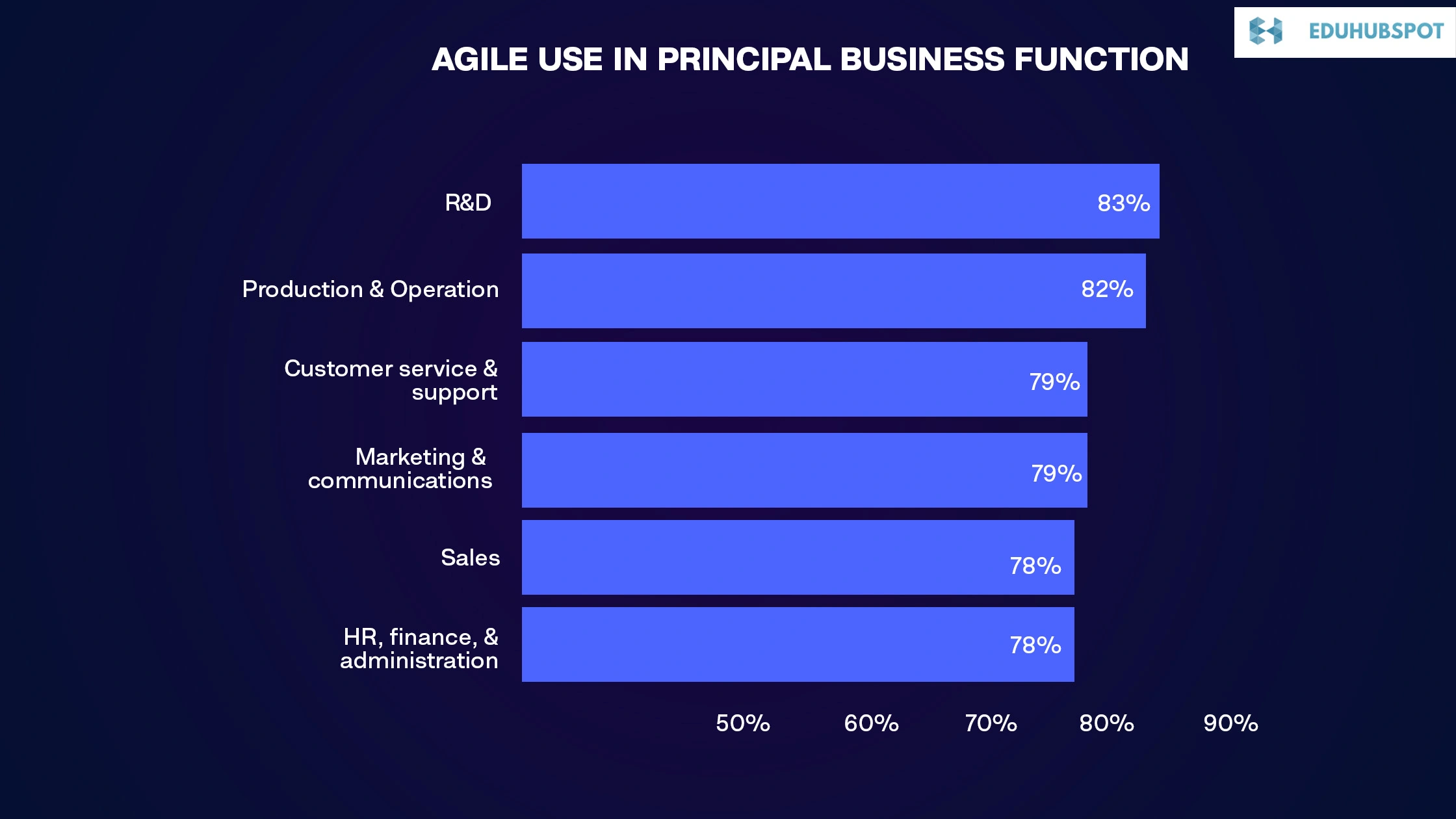
Credit: https://www.zippia.com/advice/agile-statistics/
There are several reasons why agile project management is gaining popularity:
- It helps organizations respond to changing customer needs: The agile approach emphasizes customer collaboration, which helps ensure that the final product meets the customer's needs.
- It improves project efficiency: Agile methods help teams work together more effectively and efficiently. This can lead to shorter project timelines and lower costs.
- It helps organizations deliver high-quality products: By focusing on customer satisfaction and continuous improvement, agile project management helps organizations deliver products that meet or exceed customer expectations.
- Organizations that are considering using agile project management should ensure that they have the right mix of people, processes, and tools in place. Agile methods are not suitable for all projects, so it is important to carefully assess whether agile is the right approach for your organization.
When should you use Agile project management?
Agile project management can be used in a variety of situations. It is well suited for projects that are likely to experience changes in scope or requirements. Agile project management is also a good choice when the customer is involved in the development process and when collaboration is important.
Some other situations where agile project management may be a good fit include:
- Projects that are time-sensitive
- Projects with a limited budget
- Projects that require a rapid delivery
- Projects that are complex or uncertain
- Projects with tight deadlines
- Projects that require frequent releases
- Projects that are being developed by a distributed team
- Projects with a high degree of complexity
Traditional vs. Agile Project Management
Traditional project management is a more linear approach, where the project manager creates a detailed plan at the beginning of the project and then executes it step-by-step. Agile project management is more flexible and responsive and emphasizes collaboration between the project team and the customer.
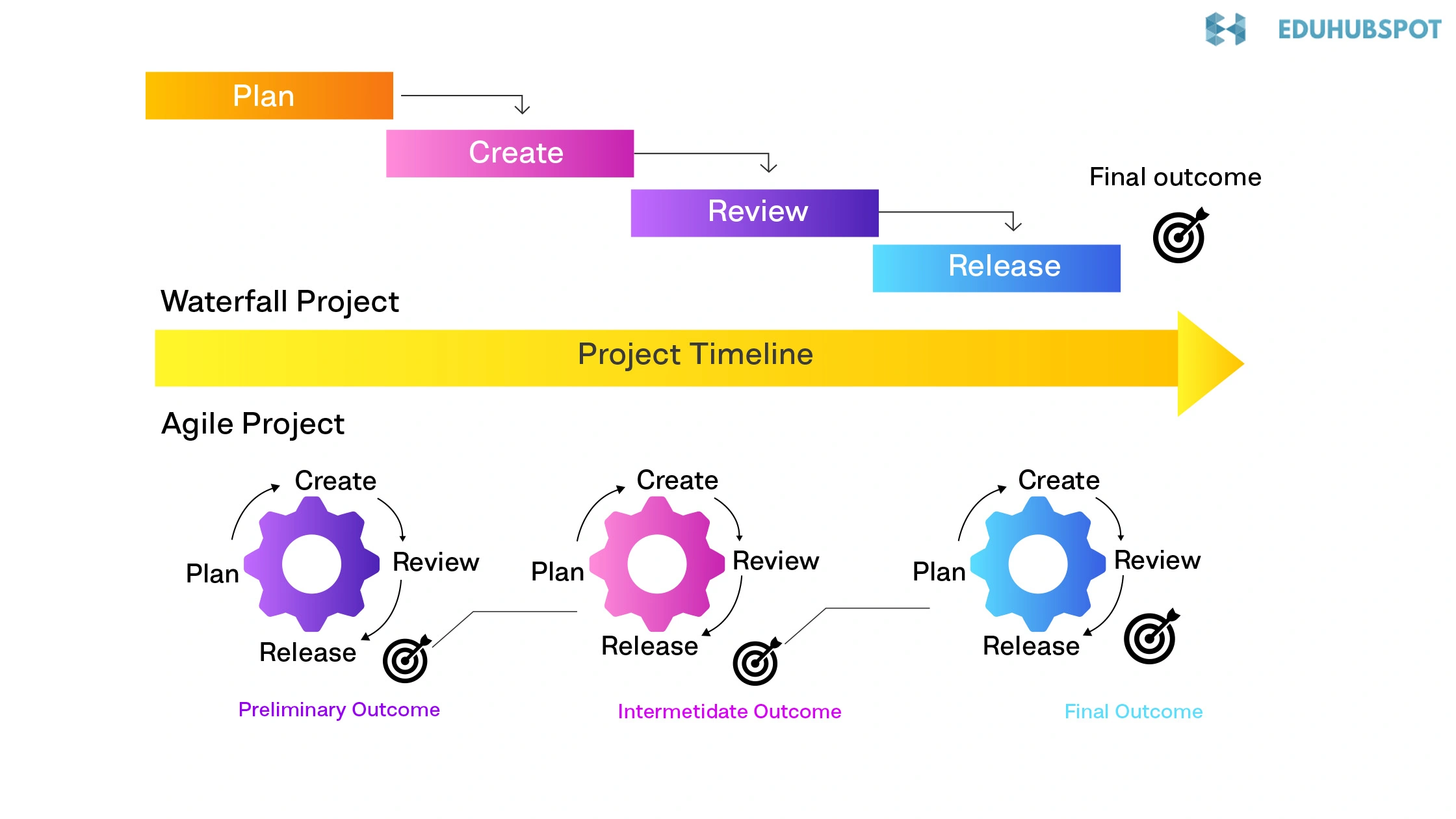
So, which approach is better? It depends on the project and the organization. Traditional project management may be more appropriate for large, complex projects that require a lot of coordination. Agile project management may be more appropriate for projects that are more iterative in nature and which are more dynamic in nature.
Both approaches have their pros and cons, so it's important to choose the right approach for the project at hand.
Traditional Project Management
| Pros | Cons |
|---|---|
| More control over the project: The project manager has a detailed plan and can more easily track progress and identify potential problems. | Inflexible and slow - Traditional Project management can be inflexible and slow to respond to change. If the project plan is not well executed, it can be difficult to make changes mid-project. |
| Easier to coordinate large, complex projects: Traditional project management is better suited for projects that require a lot of coordination between different teams and stakeholders. | Less customer involvement - The customer may not be as involved in the project, which can lead to dissatisfaction if the final product does not meet their needs. |
Agile Project Management
| Pros | Cons |
|---|---|
| More flexible and responsive to change: The agile approach is more adaptable to changes in customer needs or market conditions. | Inefficient resource planning - Unlike traditional projects, there is no fixed scope. |
| More customer involvement: The customer is involved throughout the project, which helps ensure that the final product meets their requirements. | The "see-as-you-go" nature of Agile projects means that it's hard to set many KPIs at the beginning, making measuring progress more difficult. |
Transitioning to Agile Project Management
The traditional waterfall approach to project management can be quite rigid, with little room for flexibility or change. This can make it difficult to adapt to new circumstances or customer needs. Agile project management is a more flexible approach that can be better suited to today's ever-changing business environment.
Transitioning from waterfall to agile project management can be a challenge, but it is possible with careful planning and execution. Here are some tips for making the transition:
1. Educate yourself and your team about agile project management. There are many resources available online and in print.
2. Work with an agile coach or consultant to help you plan and execute the transition.
3. Be prepared to change the way you work. Agile project management requires a different mindset and set of practices than waterfall.
4. Be patient. It will take time for you and your team to adjust to the new agile way of working.
With careful planning and execution, transitioning from waterfall to agile project management can be a successful way to improve your organization's flexibility and responsiveness.
Agile Project Management Skills
The agile methodology relies on a team-based approach, with team members working together to deliver the project goals. Strong communication and collaboration skills are essential in order to be successful in this type of environment. In addition, the following skills are key to agile project management:
- Strong problem-solving skills
- Flexibility and adaptability
- A Win-Win and collaborative mindset
- Time management skills
If you have these skills, then a career in agile project management may be the perfect fit for you.
Project management is a critical part of any business, and the Agile Project Management Certification can help professionals improve their skills in this area. The certification will help you understand the principles of agile, including its values, practices, and principles. It's also a great way to learn about the various agile methodologies and how to apply them in your own projects.
How PMI-ACP helps you gain an edge
The PMI-ACP (Agile Certified Practitioner) certification is designed for professionals who want to improve their agile project management skills. It covers the principles of agile, including its values, practices, and mindset. It also teaches you about the various agile methodologies and how to apply them in your own projects.
The PMI-ACP certification is a great way to improve your career prospects and demonstrate your knowledge of agile project management. It's also a valuable addition to any PMP (Project Management Professional) certification.
What the future holds for agile project managers
The future looks bright for those with experience in agile project management. As companies move away from the waterfall methodology and adopt the agile approach, the need for skilled project managers will increase. Those with experience in this field will be in high demand and will have the opportunity to work in a fast-paced, ever-changing environment.
If you are looking to enter the field of project management, then agile project management is a wise choice. With its focus on team collaboration and fast response to changes, the agile methodology is ideal for today's business climate. With the right skills and attitude, you can enjoy a successful career in agile project management.
Explore Our Latest
Insights

Stay updated with our recent blog posts.
Explore Our
Course Gallery

Discover a diverse range of courses designed to elevate your skills and knowledge.

