Emotional Intelligence in
Project Leadership

Discover the importance of emotional intelligence in project leadership. Learn how EI enhances team dynamics, conflict resolution, and organizational performance in project management.


Table of Contents
Share This Article
Is technical expertise and professional certification enough to ensure success in project management? Although knowledge and certification are considered key ingredients for any project, EI is the key driving force behind these projects. According to the World Economic Forum, EI is among the top ten critical skills workplaces will require by 2025. This reflects its growing importance in leadership, communication, and team management.
Studies show that 90% of high-status leaders demonstrate high levels of EI, stressing how this quality can improve leadership outcomes and an organization's performance. This article explores the significance of EI in addition to technical skills, its implications for organizational performance, and how training such as MS Project training integrates technical frames with leadership behaviors to prepare project managers for contemporary business challenges.
Understanding Emotional Intelligence
Emotional intelligence EI can therefore be defined as a major building block in successful project management, as it allows for a deeper analysis of people's feelings that influence social relations. It is associated with a range of factors, rooted in the fundamentals of project management, that are
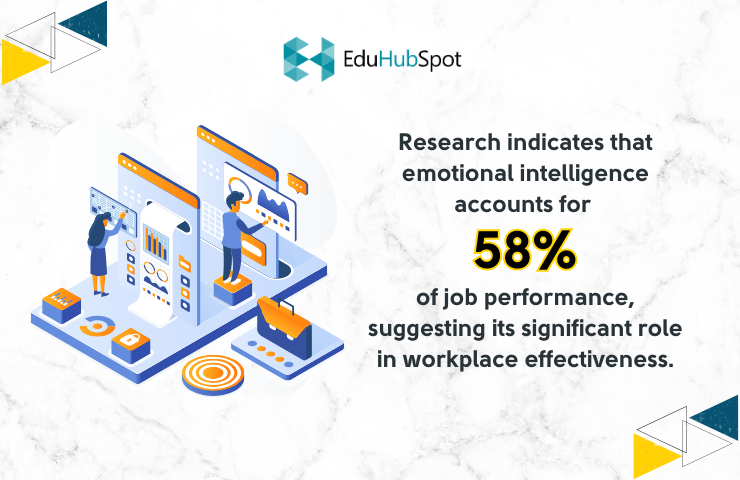
considered to be more social than technical, which have a critical influence on the success of projects and the teams managing these initiatives. To attempt to analyze the very concept of emotional intelligence, one must first define what aspects are a part of it and what exactly benefits a project manager. EI influences job performance by a percentage of 58%, affirming its relevance in optimizing individual and team achievement.
For example, John Mayer and Peter Salovey define emotional intelligence as the total efficiency of a person to understand or decipher, perceive, apprehend, and manage one's own emotions and feelings of others. These are personal identity, moods and emotions, coordination, perspective taking, and other skills that may be useful for coping with newly arising emergent constituted social needs.
Core Components of Emotional Intelligence
Emotional Intelligence (EI) refers to a set of competencies that are vital when it comes to working with other people. These components assume centrality in promoting the functioning of project management and leadership. Moreover, these components of emotional intelligence in project leadership play a very crucial role.
- Self-Awareness: The first component in the EI framework is self-awareness, which can be described as knowing one's self. Managing a project and dealing with issues involving various factors of the project and identifiable characteristics of project managers who are self-aware and capable of making decisions towards achieving the intended project goals.
- Self-Regulation: Emotional self-control is also part of control since, in emergencies, one can maintain a cool head. It is characterized by not reacting and therefore knowing how to adapt to the situation you are in.
- Empathy: Team and project-related stakeholders should be in a position to understand and even empathize with other team members. They noted that compassionate project managers get along well with those around them, manage to convey, and handle matters that develop between the two well.
- Motivation: Motivation is not only about having personal motivation but also the motivation of encouraging and propelling other people. The motivation of project leaders means that they create enthusiasm and commitment within the working teams.
- Social Skills: The aspects of interpersonal interaction include communication, conflict resolution, and cooperation. Effective and socially intelligent leaders promote a positive team climate for the members and manage the collaborative process.
The Importance of Emotional Intelligence in Project Management
Emotional Intelligence is a cornerstone of effective project management enabling leaders to guide their teams with empathy and understanding. It directly impacts leadership quality, communication, conflict resolution, and collaboration.
1. Enhanced Leadership
When it comes to handling a project on the work front, a project manager with high EI capabilities is always on the forefront, trusting others, communicating well, and being sensitive to team members' needs and changing moods. Studies suggest that organizations prioritizing EI are 22 times more likely to succeed.
2. Effective Communication
The perception and use of emotional signs help project managers convince others and show understanding to those involved in the projects and thus enhance team unity.
3. Conflict Resolution
Managers with EI when handling conflict find ways of doing it with regards to emotion to strengthen organizations and the people in them.
4. Team Collaboration
Team collaboration in project management is one of the driving factors of successful execution. It is evident that through the promotion of emotionally intelligent leadership, work teams enjoy better morale and cooperation, resulting in better-coordinated teams.
The Emotional Intelligence Effect on Team Dynamics
Only 36 percent of the world's population has high levels of EI, hence the urgent need to nurture these traits. Find out how emotional intelligence breeds trust, makes teamwork more inclusive, and breeds open communication thereby elevating team dynamics and organizational success
- Building Trust: EI helps people build mutual trust with others, and doing this helps remove barriers that may hinder free communication and creativity
- Promoting Open Communication: Self-organized leaders recognize and address emotions that lie at the foundation of individual behaviors, feedback, and information exchange to reduce future conflict.
- Encouraging Inclusivity: Evaluating different opinions is effective in encouraging creativity among the employees in the teams.
Managing Conflicts with Emotional Intelligence
To effectively manage conflicts with emotional intelligence, the following strategies can be incorporated to foster harmony and understanding within teams:
- Identifying Root Causes: EI provides leaders with effective ways of understanding emotionally laden issues so that a satisfactory resolution is arrived at
- Implementing Positive Outcomes: Leaders explain how they encourage people to find solutions all while motivating them to see the other person's perspective.
- Reducing Stress: How emotions are handled in high-stress scenarios is vital for good team health.
Enhancing Communication and Collaboration
- Empathy in Team Interactions: Self and other awareness, as well as skill in empathic listening, enables leaders to foster teamwork.
- Engaging and Encouraging Groups: Rewarding the people for their work increases morale and produces excellent standards.
- Adapting Leadership Styles: Leadership styles improve the response of teams and group cohesiveness when leadership is made.
Strategies for Developing Emotional Intelligence in Project Managers
To build up EI in project managers one needs to draw a complex plan for personal transformation, feedback, and organizational culture. Below are some key strategies to enhance emotional intelligence in project managers:
Employment, training, and development programs
- The rising popularity of EI has resulted in a flourishing market that reached $868 million in 2021 and is forecasted to grow at 25.2% CAGR between 2022 and 2030.
- Organizations can respond to this growth by offering specific initiatives that can improve the delivery of EI.
- Enrolling in a PMP certification course teaches project managers project success and leadership through mastery of technical expertise and emotional intelligence.
Feedback Mechanisms
- Include 360-degree feedback about EI competencies to get all-round views.
- Promote the kind of self-reflection and communication style that is more frequent within the teams.
Cultivating a Supportive Culture
- Demand leadership to make EI their focus and encourage the practice of EI throughout the organization.
- Ensure EI is taken into account as one of the performance indicators and KPIs.
- Encourage workplace and personal priorities to get better mental toughness.
Experiential Learning Opportunities
- Engage in leadership retreats and organize group and team-building sessions.
- Encourage cross-functionality so that the leaders meet people of different dispositions and working methods.
Overcoming Challenges in Integrating Emotional Intelligence
The incorporation of EI into project management has some challenges that may prevent its implementation. To maintain implementation efficiency and achieve long-term effectiveness, these challenges need to be foreseen and effectively managed.
Addressing Common Obstacles
- Resistance to Change
Convey where and how EI pays major value to the achievement of a project. - Time Constraints:
Emphasize the need to save so much time by preventing and resolving conflict through EI - Perception of Soft Skills
Stress how EI translates into the success or failure of projects.
Fostering Acceptance
- Develop promotional activities presenting the beneficiaries of EI.
- Organize EI to be implemented into project methodology as an organizational feature.
- Organize a list of leaders who are willing to exhibit EI initiatives.
Maintaining Long-Term Commitment
- Continuously evaluate and reflect on the EI practices that are in place and make changes where necessary..
- Integrate the EI competencies in organizational definitions of how career success is to be measured.
- As part of the provision of required support, offer constant training through coaching and mentorship programs.
Balancing Technical and Emotional Intelligence
- Ensure that training programs also help to develop technical and soft competence.
- Integrate technical and non-technical teams to ensure that every technical team has a counterpart that understands its operations and vice versa.
Final Word
Emotional intelligence, or emotional mastery, is not a destination but a journey that continues throughout the life span of project managers as leaders. Investing in EI is an investment in individual growth and organizational growth of projects which allows leaders to build resilient teams, manage unforeseen uncertainties, and achieve sustained excellence in project management. If you want to develop these critical skills, then you can enroll in a specialized training courses that offers unique training in technical as well as emotional intelligence for unequaled leadership success.
Frequently Asked Questions (FAQs)
1. What is emotional intelligence?
Emotional intelligence is the ability to understand, express, and empathize with one's own and others' emotions.
2. Why is emotional intelligence important for project managers?
In order to lead a successful project execution, a project manager must be aware of his or her team members' emotional state as well. This aspect is crucial as it further helps in team collaboration, problem-solving, and better and enhanced interpersonal relationships.
3. What is the emotional quotient (EQ)?
Emotional quotient (EQ) is a level of a person's emotional intelligence. It is usually represented as a score in standardized psychological tests.
4. What are the core components of emotional intelligence?
Emotional intelligence has five core components: self-awareness, self-regulation, empathy, motivation, and social skills.
Explore Our Latest
Insights

Stay updated with our recent blog posts.
Explore Our
Course Gallery

Discover a diverse range of courses designed to elevate your skills and knowledge.

