Power of Adaptive Project Management and
Iterative and Incremental Strategies

Learn about adaptive project management (APM) and how iterative and incremental strategies help manage changing requirements, reduce risks, and improve stakeholder satisfaction.


Table of Contents
Share This Article
Have you ever been on a project where requirements kept changing? If so, don't worry, as this is too common nowadays. Managing projects in today's skyrocketing world in the most proper way is a difficult task. Thus, what can be expected is the development and the formation of highly responding and flexible team members. This is where adaptive project management (APM) comes into the picture.
APM uses iterative and incremental strategies to deal with change, which in turn increases efficiency, reduces risks, and improves stakeholder satisfaction. If you are a project manager with PMP certification or want to become one, then you must learn these strategies to succeed. This blog will help you understand adaptive project management and master iterative and incremental strategies.
Evolution of Adaptive Project Management
Traditional project management relies on a structured and sequential approach, such as the Waterfall model, where all the phases are planned upfront. Though it is suitable for situations where the outcome is easy to predict, it doesn't work well amid uncertainty and rapid changes. However, adaptive project management (APM) utilizes a more go-with-the-flow method, wherein the team can adopt flexibility, make gradual enhancements, and make split-second decisions. By incorporating the cycle of continuous feedback and regular iterations, APM guarantees that the projects will be flexible enough to change swiftly when the need arises due to new requirements and market sustains.
Why Adaptive Project Management Matters?
The business environment is changing more quickly than ever, which makes it necessary to manage projects that can keep up with the speed of change. APM provides the following benefits:
- Responsive to Change—APM's adaptation to priorities, risks, and stakeholder suggestions at various times makes it a major part of the project lifecycle in a day.
- Risk Mitigation—Timely resolution of potential issues through continuous monitoring significantly lowers the costs of failed assignments in the future.
- Enhanced Collaboration – It boosts employees' contact levels and builds a framework to be more transparent and in agreement with the ideals.
- Higher Stakeholder Satisfaction—By delivering incremental value and integrating feedback, APM ensures that the results match and exceed user expectations and business objectives.
Where Adaptive Approaches Work Best?
APM performs best in circumstances where constant change is the norm, and the ability to adapt is indispensable:
- Software Development: Agile and Scrum techniques promote rapid development, thanks to the continuous incorporation of customer responses and changing market tides into the evolution of the product.
- Construction Projects: With phased development, adjustments can be made to projects as needed, such as for site conditions, client needs, and regulatory changes, which will facilitate project management and execution.
- Healthcare & Pharmaceuticals: Adaptive clinical trials use current patient data so the researchers can modify treatments as needed, ensure they are as efficient as possible, and get the drugs to the market quicker.
Embracing an organization's ever-changing dynamic relationships and development is a way to explore its complexities through agility—by running projects with greater success and by applying business resilience as a long-term solution.
Mastering Iterative and Incremental Strategies
Iterative Strategy: Refining Through Cycles
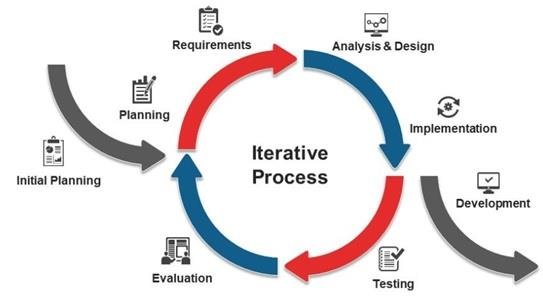
An iterative model means renewing a product over multiple cycles until it fulfills the needs. This is the same as carving a statue—each progressive step produces a better result.
Example: Iterations in software development approach through Agile (sprints) where features are designed based on user feedback.
Main Pros:
- Early risk detection
- Continuous improvement
- Stakeholder engagement throughout
Incremental Strategy: Delivering in Functional Parts
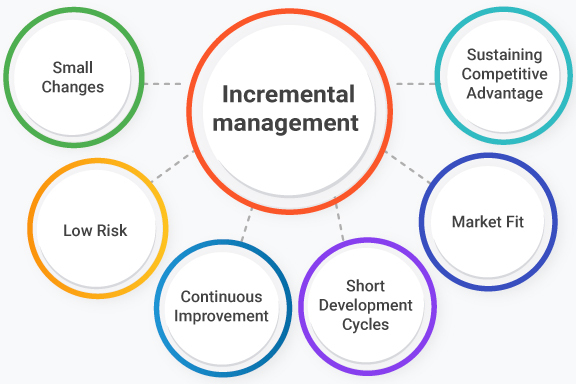
An incremental approach involves building a project in small sections that can be practically used over time. The analogy is the same as finishing the construction of a building that has been started—delivering rooms one by one instead of waiting for the entire structure to be complete.
Example: A real estate company is building several flats in stages to increase sales and, thus, revenue at an early stage.
Key Benefits:
- Rapid time-to-market
- Instant delivery of value
- Insurance from risk and managing stakeholders are far more manageable now that the project has been comprehensively approached.
Iterative vs. Incremental: What's the Difference?
| Feature | Iterative Approach | Incremental Approach |
| Process | The same product or deliverable is continuously refined through several cycles, each version being the development of the previous. | The project is divided into separate components, which are developed and delivered separately. |
| Focus | It highlights learning and development, improving the product with each iteration depending on the feedback received. | It follows a structured and ordered process and ensures that each step is executed correctly so that each increment is functional. |
| Example | Agile software development is where the initial version of an application is improved through several sprints. | A mobile app where every part is simultaneously released is an example of a mobile application with features introduced individually. |
Adaptive Project Management in Action
Adaptive project management (APM) excels in a real-world setting in which adaptability, responsiveness, and continuous improvement play vital roles. Let's look at two case studies that describe how the APM principles can be used in different sectors to get projects right.
Case Study 1: Tech Startup Using Agile Iterations
Project Overview
A technology startup initiated a project to create a personal finance mobile application. Because of the dynamic nature of software development and the ever-changing user needs, a traditional waterfall approach was deemed too rigid. The project team, however, decided to adopt an Agile, iterative approach, which seemed to be flexible, get continuous feedback, and make incremental improvements.
Project Execution
- Sprint-Based Development – The team organized the project into two-week Agile sprints, enabling them to create short, testable app versions.
- Stakeholder involvement— Stakeholders reviewed the sprints regularly to ensure that the feedback was continually utilized.
- Risk Mitigation— Early testing of the prototypes allowed the team to see the problems that arose from the users' end. This further helped them take steps to improve those issues with certain corrected features, which increased users' engagement.
- Resource Optimization—The development process was simplified by the cross-functional collaboration between developers, UX designers, and product managers.
Outcome and Lesson Learned
- Reduced project risks by discovering problems in time and thus not needing to do any costly remaking.
- Improved customer satisfaction through endless loops of user feedback.
- Reduced time-to-market by producing a Minimum Viable Product (MVP), leading to growth instead of waiting for full development.
- By demonstrating the effectiveness of adaptive planning, the team was assured that the project was on the right track despite the rapidly changing situation.
Case Study 2: Real Estate Project with Incremental Delivery
Project Overview
A real estate developer launched a residential project involving 500 apartments. The team adopted an incremental project management approach to improve financial sustainability and market responsiveness. This thereby helped deliver the project in phases instead of one final release.
Project Execution
- Phase-Based Delivery – Construction was carried out in five stages, and 100 apartments were built in each phase.
- Early Stakeholder Engagement—The first phase was publicized through sales and marketing even before it was completed, which got people interested and made them book in advance.
- Adaptive Design Adjustments – The customer feedback from the first buyers made some improvements, such as the aspects of energy efficiency, the public recreation areas, and facilities to be made.
- Financial Risk Reduction—Early sales generation reduces cash flow, thereby reducing the dependence on and ensuring smoother project execution.
Outcome and Lessons Learned
- Spreading out financial risks and making early revenue generation possible were the key elements for the project viability increment.
- Stakeholder satisfaction was increased by buyers being allowed to drive design improvements.
- To enhance the flexibility of the construction planning, they ensure that market conditions and legal modifications to the last phases are taken into account.
- Demonstrated the effectiveness of incremental project management in large-scale developments requiring phased execution.
Best Practices for Implementing Iterative and Incremental Strategies
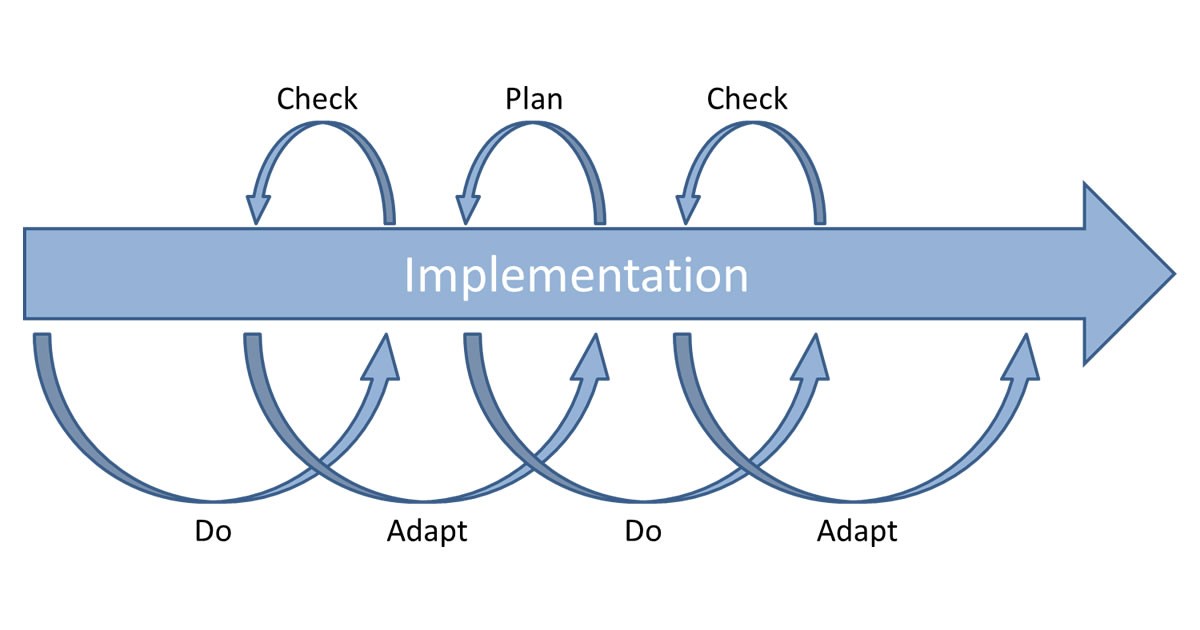
Select the Right Approach—Utilize iterative techniques for ongoing improvements (software development) and incremental methods for phased delivery (real estate). A hybrid approach is best suited for complex projects.
Engage Stakeholders Continuously—Gather feedback in sprints, check whether the prototypes work, and frequently interact with the product owners. This will help keep the project aligned and deliver value.
Leverage Agile Frameworks— Consider using Scrum for well-structured iterations, Kanban for managing workflow, or a hybrid Agile approach for flexibility.
Align with PMBoK Guidelines— Integrate the iterative and incremental strategies embedded in the existing process groups according to the PMBoK. This will further help in systemized execution, risk management, and workplace involvement.
Conclusion
To stay relevant and competitive in today's business world, teams need to be able to adjust and improve their projects in a way that reduces risk and increases stakeholders' satisfaction. By using incremental and iterative methods, companies can achieve a continuous enhancement effect whose value is released in small, manageable amounts.
Mastering these methods is one of the most required skills for PMP-certified project managers and those pursuing the PMP certification. PMBOK, therefore, becomes a perfect reference point for APM as it anchors the orderly yet flexible course of modern projects. Project leaders can raise project success, increase technical efficiency, and advance their careers by adopting Agile methods, stakeholder feedback, and phased delivery.
Frequently Asked Questions (FAQs)
What is the key difference between iterative and incremental project management?
Iterative: The main focus of the iterative approach is refining a product over repeated cycles to respond to continuous feedback.
Incremental: On the one hand, the functional components are phased, and early value is ensured. On the other hand, such processes and their parts are followed in the right order.
When should I use an iterative approach vs. an incremental approach?
Use the iterative one when continuous enhancements become necessary (e.g., in the software development industry).
Use the incremental one when the business value is delivered by the phased approach (e.g., the real estate projects)
How does Adaptive Project Management reduce risks?
Using continuous checking, iterative qualitative feedback loops, and the delivery of various phases, the tool has been on the right track in its action from the beginning and prompt responses as needed.
Explore Our Latest
Insights

Stay updated with our recent blog posts.
Explore Our
Course Gallery

Discover a diverse range of courses designed to elevate your skills and knowledge.

