Team Building: Success Path to
Project Management



Table of Contents
Share This Article
Team building is an essential component of successful project management. It involves the development and maintenance of strong relationships between group members and encourages collaboration, communication, problem-solving, and trust. These activities help create a sense of unity within a group and foster a greater understanding of individual roles, responsibilities, and skill sets needed to achieve project objectives. This article will discuss the importance of team building in project management and provide some strategies for improving the process. By leveraging team-building tools and techniques, organizations can achieve greater success in delivering projects on time and within budget.
In addition to understanding the critical role of team building in project management, it's also valuable to recognize the importance of formal training and certification programs that equip project managers with the necessary skills to lead their teams effectively. The Microsoft Project Certification is a notable example of such a program. This course is designed to provide project managers with comprehensive knowledge and practical skills in using Microsoft Project, one of the most widely used project management software tools.
It is essential to understand how to effectively utilize team dynamics to ensure that everyone involved is working towards common goals with consistent effort.
What is team building in project management?
Team building in project management is the process of developing a cohesive team that will work together to achieve successful outcomes. It involves identifying the strengths and weaknesses of each member and using those insights to create an environment where collaboration, trust, and open communication are encouraged.
These activities can range from fun exercises like getting-to-know-you games to more serious activities that require problem-solving and goal setting. It is important for project managers to set aside time for these activities in order to create a strong team dynamic, enabling them to work together effectively towards achieving their goals. Effective team building can help increase productivity, reduce conflicts and improve morale among the members. Additionally, it can help create a positive work culture that encourages innovation and creativity. It is an essential component of successful project management and should be incorporated into any project management plan for maximum success.
Importance of team building in project management
It is an essential part of project management. which helps to create a strong bond between the members and allows them to work together effectively. It also increases trust among members and reduces conflicts that may take place during project implementation.
These activities, such as icebreakers, team-oriented games, problem-solving exercises, and social gatherings, help to bring all members closer together and promote a better understanding of each other's roles and responsibilities.
It is also beneficial for fostering creativity and innovation. Also helps members to think outside of the box, come up with creative solutions to problems and develop new ideas that can benefit the project. These activities also encourage individuals to take risks, which can lead to more effective solutions in the long run.
Using team-building activities in the workplace not only benefits the team and the organization but also has a positive impact on individual employees. These exercises allow employees to build relationships with their coworkers, as well as create trust and mutual respect amongst each other. When all members are more connected and supportive of one another, they become better equipped to work together efficiently and effectively.
Tips For Creating An Effective Team

Tips to help you create an effective project team:
- Establish clear roles and responsibilities: Make sure that everyone in the team knows what their expected role is and how this role contributes to the overall success of the project.
- Encourage collaboration: To ensure the success of a project, members must work together and be open to working with different ideas. Encourage everyone to share their thoughts, opinions, and suggestions.
- Set realistic deadlines: Establish deadlines for tasks and make sure that everyone understands what these timelines are so that they can plan accordingly.
- Provide resources: Ensure that the all members have access to any tools and resources they may need to complete the project successfully.
- Offer feedback: Regularly provide constructive feedback and recognition for a job well done so that members are motivated to continue working hard.
- Communicate effectively: Make sure there is constant and open communication between group so that everyone is aware of the progress and any changes that need to be made.
- Celebrate success: Don't forget to celebrate when milestones are reached. It will help to keep morale high and ensure that everyone feels appreciated for their hard work.
- Establish rules: Finally, make sure that all team members are aware of the rules and expectations for the project.
- Evaluate progress: Schedule regular check-ins to assess progress and identify any issues that need to be addressed.
- Set Ground Rules: Create a set of rules that everyone agrees on in order to ensure that everyone stays on track and remains respectful of one another. This can help keep the team focused on their goals and objectives.
- Promote Flexibility: Be open to new ideas and approaches, as well as different ways of working together. Encourage team members to think outside the box and to find out innovative solutions for any problems that arise.
- Respect Diversity: Respect and value the different perspectives, experiences, and backgrounds of each member. By acknowledging and appreciating the diverse talents of your team, you can unlock its full potential.
- Utilize Technology: Leverage technology such as virtual meeting platforms, task management tools, and other collaboration software to facilitate remote work.
Role Of Project Managers In Team Management

They are responsible for creating a project plan, assigning tasks to all members, tracking progress, and providing feedback. In addition, they also ensure that the all work together to achieve the desired goals and objectives of the project.
Project managers should have excellent communication skills in order to effectively communicate with members, stakeholders, and other key project personnel. They must be able to lead by example, motivate team members and set realistic goals. Project managers also need to be well organized and aware of all fundamentals of project management in order to manage multiple tasks simultaneously, as well as ensure that deadlines are met.
Project managers must also possess excellent problem-solving skills in order to identify potential issues, develop solutions and resolve conflicts in a timely manner. They must have strong leadership skills to ensure that team members feel comfortable expressing their opinions and ideas.
Finally, project managers should be able to recognize potential risks and take appropriate steps to mitigate them. This may involve creating contingency plans or introducing new strategies for dealing with unforeseen changes during the project's execution.
By playing an active role in team management, project managers can help to claim that the project is completed successfully and on time. Overall success of the project depends on project manager role, so it is essential that they possess these qualities in order to be effective leaders
Stages of Team Development
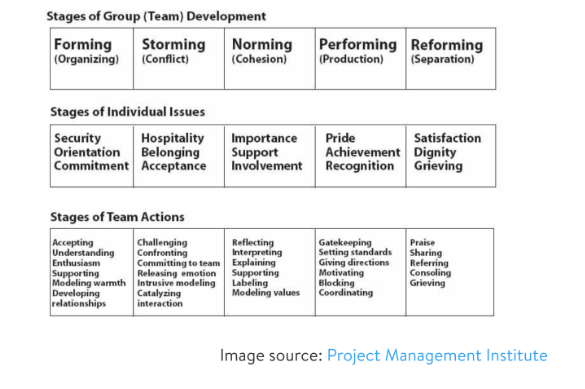
Below are four stages of team development that all go through as they mature and grow: Forming, Storming, Norming, and Performing.
Forming: the initial stage of team development is when the everyone is just getting to know each other. The members may be new to each other and the group dynamics, roles and responsibilities are still being established. In this stage, communication is polite and friendly but guarded as people are getting accustomed to one another.
Storming: this is a challenging stage where differences in opinion, conflict, and power struggles may arise. It's very important to learn how to manage these issues constructively while also developing trust between members.
Norming: as the team continues to work together, they start to understand one another's strengths, weaknesses, and goals. This stage allows to identify common objectives and brainstorm solutions collaboratively.
Performing: this is the most successful stage where members have a strong understanding of each other, trust has been built between them, and they are working together in harmony towards achieving their goals. At this point, the team can be very productive as they have a strong understanding of how to work together and achieve results.
Set expectations for your team
Having a clear set of expectations for your team is essential in order to ensure that everyone understands what their responsibilities are and how they should be performing. This also helps create a sense of accountability as each member will know exactly what is expected of them.
Your team needs to know the goals you're trying to achieve, the tasks that need to be completed, and the deadlines for each task. You should also make sure that everyone understands what their roles are and how these tasks can be fit into the overall mission of the company.
In addition to setting clear expectations, it's also important to provide feedback on a regular basis. This will help your team understand their progress and make sure they are staying focused on their goals.
Finally, it's important to have an open line of communication within members so that any questions or concerns can be addressed promptly. This helps foster a positive working environment where everyone feels comfortable discussing issues and working together to find solutions.
Major Barriers To Project Team Development
Project teams are often tasked with completing complex tasks in a very short amount of time, and they must work together effectively to achieve their goals. However, there can be some major obstacles that prevent a project team from developing properly and reaching success.
Lack of Communication: Poor communication is the most common barriers to successful team collaboration. Without clear and consistent communication, members can become disengaged, leading to missed deadlines and decreased productivity. Additionally, without effective communication strategies, members may not fully understand the goals of the project or how their roles fit into the overall success.
Unclear Roles & Responsibilities: When a project is lacking in clarity, it can be difficult for members to understand their roles and what is expected of them. Without a clear understanding of who is responsible for which tasks and roles, teams are likely to struggle in achieving success.
Conflict and Poor Group Dynamics: Conflict between members is the most significant barriers to successful team collaboration. Without an established system for handling conflict, it can be difficult to maintain a productive and collaborative environment. Additionally, poor group dynamics can lead to decreased motivation, inefficient decision-making processes, and a lack of trust between members.
Time Constraints: Projects often have tight deadlines and limited resources, which can prevent group from working together effectively and efficiently. Without sufficient time to plan, implement, and evaluate projects, teams can quickly become overwhelmed and unable to complete tasks in a timely manner.
Technology Challenges: In today's digital world, technology is often an integral part of team collaboration. However, technological obstacles can lead to missed deadlines and errors due to inadequate technology or lack of technical knowledge.
Overcoming Team Building Barriers
It is an important part of any successful organization. However, there can be several barriers that prevent teams from working cohesively and efficiently. It's essential to recognize these potential roadblocks and take action to overcome them in order to ensure a productive team.
All members should strive to open and honest dialogue with one another, which includes a willingness to voice concerns and ideas without fear of criticism.
Group should look towards their leader for motivation and guidance, so it's important that leaders have strong interpersonal skills and a plan for how the they can reach their collective goals.
Everyone should strive to build relationships with one another based on trust and understanding, which can be done through activities designed to foster a sense of camaraderie.
The impact of team building in project management
The impact of team building on project management is far-reaching. Teams that are well-bonded are better able to communicate and work together efficiently, leading to improved productivity. It also promotes an atmosphere of cooperation, which can help reduce conflicts or tensions among members. Furthermore, by focusing on problem-solving also help everyone has to be more creative and come up with innovative solutions for challenges. Finally, it allows members to get to know each other better, improving their understanding of each other's strengths and weaknesses and allowing them to work together more effectively.
Summing Up
At any point in the life of a team, project managers should be aware of certain effectiveness/ineffectiveness indicators to determine if they are making progress towards their goals. These can include things like communication patterns between members; how well individuals work together or specialize versus generalizing skillset specific knowledge base, among other factors which will better enable them to achieve success with projects from beginning through end result.
Are you preparing for PMP ?

Frequently Asked Questions (FAQs)
Why team building is important for project managers?
Team building is crucial for project managers as it enhances collaboration, fosters a positive working environment, and boosts team morale. It aligns team members towards common goals, facilitates better communication, and helps in resolving conflicts, all leading to improved project performance and outcome.
What are the 4 main types of team building?
- Problem-Solving/Decision-Making Activities: Focuses on solving complex issues or making decisions as a team.
- Communication Activities: Aimed at improving team communication and understanding.
- Trust-Building Activities: Designed to establish and reinforce trust among team members.
- Adaptability/Flexibility Activities: Engaging tasks that promote adaptability and resilience amidst changes.
What is team building and examples?
Team building refers to various activities, exercises, or initiatives undertaken to enhance social relations, define roles, and build cohesiveness among team members. Examples include:
- Outdoor activities: Such as ropes courses, paintball, or team sports.
- Indoor activities: Like escape rooms, workshops, or team training sessions.
- Virtual team building: Engaging in online games, virtual coffee breaks, or remote workshops.
- Social gatherings: Such as team lunches, outings, or celebrations.
How to foster better project management teamwork via team building?
Fostering better project management through team building can be achieved by:
- Aligning on Objectives: Ensuring the team is unified under shared goals.
- Fostering Open Communication: Creating a safe space for open, honest dialogues.
- Building Trust: Through consistency, reliability, and collaborative activities.
- Celebrating Successes: Acknowledging and rewarding team achievements.
- Providing Training: Facilitating workshops and activities that enhance teamwork.
- Encouraging Inclusivity: Valuing and incorporating every member's ideas and perspectives.
- Resolving Conflicts Proactively: Addressing issues promptly and fostering a positive working environment.
Explore Our Latest
Insights

Stay updated with our recent blog posts.
Explore Our
Course Gallery

Discover a diverse range of courses designed to elevate your skills and knowledge.

