Definitive Handbook to the Waterfall Model: Your Ultimate Resource for
Project Delivery



Table of Contents
Share This Article
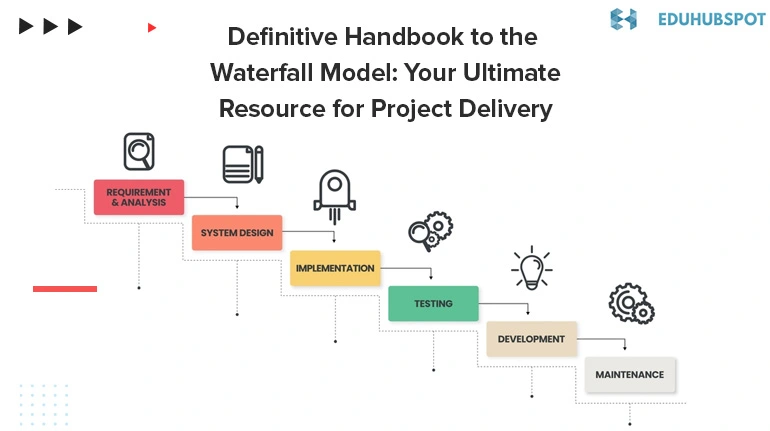
The Waterfall Model is a well-known software development methodology that has been widely adopted in the industry for several decades. It is a sequential and linear approach that divides the software development process into distinct phases, each with a defined set of objectives and deliverables.
While the Waterfall project management has been around for quite some time, it remains relevant today as it offers a structured and disciplined approach to software development that can help ensure project success and for more clarity on this explore our PMP Mindset tool. It is particularly useful for large and complex projects that require a significant amount of planning and coordination.
In this Definitive Handbook to the Waterfall Model, we will delve into the key concepts, phases, and best practices of this software development methodology. We will explore the benefits and drawbacks of using the Waterfall Model, and provide practical advice on how to apply it effectively in your project delivery.
Whether you are a seasoned software development professional or just starting, this guide will serve as your ultimate resource for understanding and implementing the Waterfall Model in your organization. So let's dive in and explore the world of the Waterfall Model together!
The Phases of the Waterfall Model
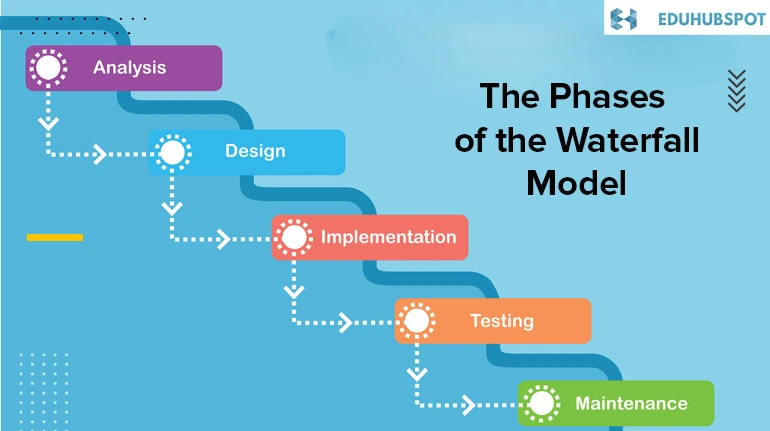
The Waterfall project management is a sequential and linear approach to software development that is divided into distinct phases. Each phase has its own set of objectives, deliverables, and entry and exit criteria. The following are the phases of the Waterfall Model:
- Requirements gathering: In this phase, the requirements for the software system are gathered and analyzed. This includes identifying user needs, functional and non-functional requirements, and any constraints that need to be taken into consideration.
- Design: Once the requirements have been gathered and analyzed, the next phase is the design phase. This phase involves creating a detailed design specification that outlines how the software system will be built. This includes the architecture, data structures, algorithms, and interfaces that will be used.
- Implementation: The implementation phase is where the actual coding of the software system takes place. The design specifications are translated into executable code, and the software is developed and tested.
- Testing: In the testing phase, the software system is tested to ensure that it meets the requirements and specifications outlined in the earlier phases. This includes testing for functionality, performance, and security.
- Deployment: Once the software has been developed and tested, it is deployed to the production environment. This involves installing the software on the target hardware and configuring it for use.
- Maintenance: The final phase of the Waterfall Model is maintenance. This involves ongoing support and maintenance of the software system, including bug fixes, updates, and enhancements.
Each phase of the Waterfall Model is typically completed before moving on to the next phase, and changes to the requirements or design specifications are not usually allowed once development has begun. This ensures that the software system is developed in a structured and disciplined manner, with a focus on quality and meeting the user's needs.
What Is Waterfall Project Management Software?
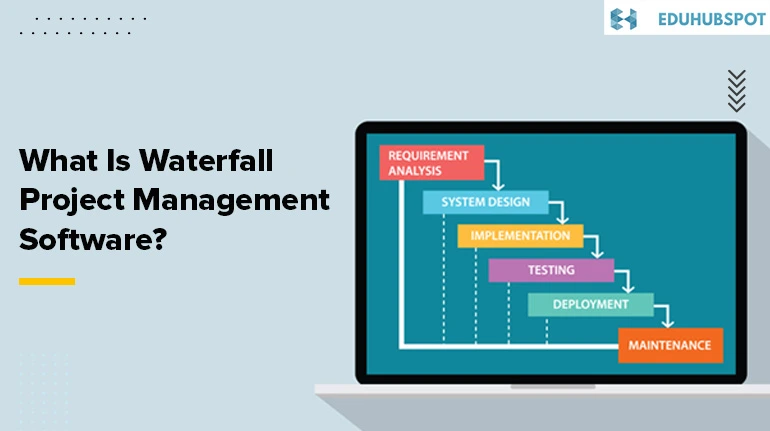
Waterfall project management software is a type of software tool that is designed to support the Waterfall methodology for project management. This software typically provides a range of features and functionalities to help project teams plan, organize, and execute projects sequentially and linearly, following the phases of the Waterfall Model.
Some common features of Waterfall project management software may include:
- Project planning and scheduling tools: These tools help project teams define the scope, objectives, and timelines of their projects, and create detailed project plans and schedules.
- Requirements management tools: These tools help project teams define and manage the requirements for their software system, and track the progress of requirements through the different stages of the Waterfall Model.
- Design and development tools: These tools provide support for the design and development stages of the Waterfall Model, including coding, testing, and integration.
- Quality assurance and testing tools: These tools help project teams test and validate the software system to ensure that it meets the requirements and specifications outlined in earlier stages.
- Reporting and analytics tools: These tools provide project teams with real-time data and insights on the progress of their projects, allowing them to track milestones, identify issues, and make informed decisions.
Waterfall project management software can be useful for large and complex projects that require a structured and disciplined approach to project management. It can help project teams ensure that their projects are delivered on time, within budget, and to the satisfaction of stakeholders.
The pros and cons of Waterfall project management
Waterfall project management has been a popular methodology for many years, but it also has its pros and cons. Here are some of the advantages and disadvantages of using the Waterfall approach:
Pros:
- Clear structure and well-defined phases: Waterfall project management follows a structured and sequential approach, with clear phases and deliverables, which helps ensure that the project stays on track and meets its objectives.
- Documented requirements: The Waterfall approach requires that requirements are fully documented before development begins, which can help prevent misunderstandings or miscommunications between stakeholders and the development team.
- Predictable outcomes: The Waterfall approach is predictable, which can make it easier for stakeholders to understand and manage risks.
- Well-suited for stable and static projects: Waterfall is well-suited for projects with well-defined and stable requirements, where there is little need for flexibility or change.
Cons:
- Limited flexibility: Because each phase of Waterfall project management must be completed before moving on to the next, changes or new requirements that arise during development can be difficult to incorporate.
- Time-consuming and slow: The Waterfall approach can be time-consuming, as each phase must be completed before moving on to the next, which can result in longer development cycles.
- No iterative approach: Waterfall does not provide opportunities for iteration and feedback, which can limit the ability to adjust and improve the software system as it is being developed.
- Difficulty in handling complex projects: For complex projects, it can be difficult to fully understand all the requirements before development begins, which can lead to problems down the line.
Waterfall project management can be a useful approach for projects with stable and well-defined requirements, but it may not be the best fit for projects that require flexibility, iteration, or handling complex problems.
Examples of Waterfall Models
The Waterfall Model has been used in a variety of industries and applications. Here are a few examples of how the Waterfall Model has been used:
- Software development: The Waterfall Model was originally developed for software development, and it continues to be used in this field today. Many software development projects still follow the Waterfall Model, particularly for projects with well-defined requirements and limited changes.
- Construction projects: Construction projects often follow a sequential and linear approach, similar to the Waterfall Model. For example, the construction of a building may involve designing the structure, obtaining permits, laying the foundation, constructing the frame, installing the electrical and plumbing systems, and finishing the interior.
- Manufacturing processes: The Waterfall Model can also be applied to manufacturing processes, where each stage of production must be completed before moving on to the next. For example, a car manufacturer may follow a Waterfall Model approach to production, with each stage of the assembly being completed before the next begins.
- Marketing campaigns: The Waterfall Model can be used in marketing campaigns, where the different stages of the campaign are completed linearly. For example, a marketing campaign may involve market research, developing a marketing plan, designing and creating marketing materials, launching the campaign, and tracking and analyzing the results.
- Engineering projects: Engineering projects often follow a linear approach, similar to the Waterfall Model. For example, the design and construction of a bridge may involve designing the structure, obtaining permits, preparing the site, building the foundation, constructing the bridge deck, and adding finishing touches.
Conclusion
Waterfall model is a project management methodology that has been applied in various industries such as software development, construction, manufacturing, engineering, and marketing campaigns. Although the model provides structure and clear objectives, it may not be suitable for projects that require flexibility and frequent changes. Thus, it is important to carefully assess whether the Waterfall model is the right approach for a specific project, taking into account its specific needs and objectives.
Frequently Asked Questions (FAQs)
How does the Waterfall Model handle project risks?
The Waterfall Model identifies risks early in the project, typically during the planning phase, and includes a separate risk management plan to address them. However, because the model is linear and sequential, it may not be able to handle risks that arise later in the project, especially if they require major changes to previous stages.
What is the role of documentation in the Waterfall Model?
Documentation is a critical aspect of the Waterfall Model and is used to ensure that each phase of the project is complete and accurate before moving on to the next phase. This includes creating detailed project plans, requirements documents, design specifications, test plans, and user manuals.
Can the Waterfall Model be combined with other project management methodologies?
Yes, it is possible to combine the Waterfall Model with other project management methodologies, such as Agile or Lean, to create a hybrid approach that incorporates the benefits of both. This may involve using Agile techniques for certain phases of the project, such as testing or deployment.
How does the Waterfall Model handle changes in project requirements?
The Waterfall Model assumes that requirements are stable and well-defined from the outset, and does not handle changes in requirements well. Any changes in requirements may require going back to previous phases and starting over, which can be time-consuming and costly.
Is the Waterfall Model still relevant in modern project management?
While Agile methodologies have gained popularity in recent years, the Waterfall Model is still relevant in certain industries and projects. It may be a suitable approach for projects with well-defined requirements and limited changes, such as construction or manufacturing projects.
What is the difference between the Waterfall Model and the V-Model?
The Waterfall Model and the V-Model are both linear and sequential project management methodologies, but the V-Model emphasizes testing and validation throughout the project lifecycle. The V-Model also incorporates feedback loops that allow for earlier detection and resolution of issues.
How does the Waterfall Model handle project delays or setbacks?
The Waterfall Model may not handle delays or setbacks well, as it assumes that each phase of the project is completed before moving on to the next. Any delays or setbacks may require going back to previous phases, which can be time-consuming and costly.
Can the Waterfall Model be used in software development projects?
Yes, the Waterfall Model can be used in software development projects, but it is typically best suited for smaller projects with well-defined and stable requirements. For larger or more complex software development projects, Agile methodologies may be more appropriate.
How does the Waterfall Model ensure quality control?
Quality control is built into the Waterfall Model, with each phase of the project being completed before moving on to the next. This allows for early detection and resolution of issues and ensures that the final product meets the specified requirements.
How does the Waterfall Model handle communication and collaboration among team members?
The Waterfall Model assumes that communication and collaboration among team members are hierarchical and top-down, with each team member reporting to a higher authority. This may not be suitable for projects that require more collaboration and communication among team members.
Explore Our Latest
Insights

Stay updated with our recent blog posts.
Explore Our
Course Gallery

Discover a diverse range of courses designed to elevate your skills and knowledge.

