Who needs
PMP® Certification?

Competition is fierce in this fast-paced world of project management. Organizations and employers don't only look for skills and expertise; they also want proof of that. And that's where PMP (Project Management Professional) Certification comes in. With over 1.4 million PMP-certified professionals worldwide, this credential has become the golden standard for project managers globally.


Table of Contents
Share This Article
Competition is fierce in this fast-paced world of project management. Organizations and employers don't only look for skills and expertise; they also want proof of that. And that's where PMP (Project Management Professional) Certification comes in. With over 1.4 million PMP-certified professionals worldwide, this credential has become the golden standard for project managers globally.
But is this the only reason to choose this certification? The answer is NO. It doesn't matter what field or industry someone is in. What matters is the wish to take career steps toward project management. That's it. In this case, PMP should be the next step, and considering an MS Project Certification alongside can further solidify an individual's capabilities and recognition in the field. Or let's put it this way: Are you at that stage in your career where you think, what next? Then trust me, PMP® should be your first choice! But is it worth it or not? This article will help individuals clear all their doubts regarding PMP® certification and why someone should get one.
Who Needs PMP Certification?
First of all, it's crucial to know who needs the certification of PMP. The most well-known project management credential is the Project Management Professional (PMP) certification.
It supports project managers in advancing their careers across industries and bolstering organizations with the talent they require for increased productivity. So, all those who are looking forward to an excellent career move should get PMP certified.
The PMP certification is ideal for people who are already certain they want to pursue a career in project planning and execution across functional teams from start to finish, which is the most important thing to grasp about it.
Also, this certification can help in increasing earning potential. A study shows that PMP-certified professionals earn 32% more than non-certified ones.
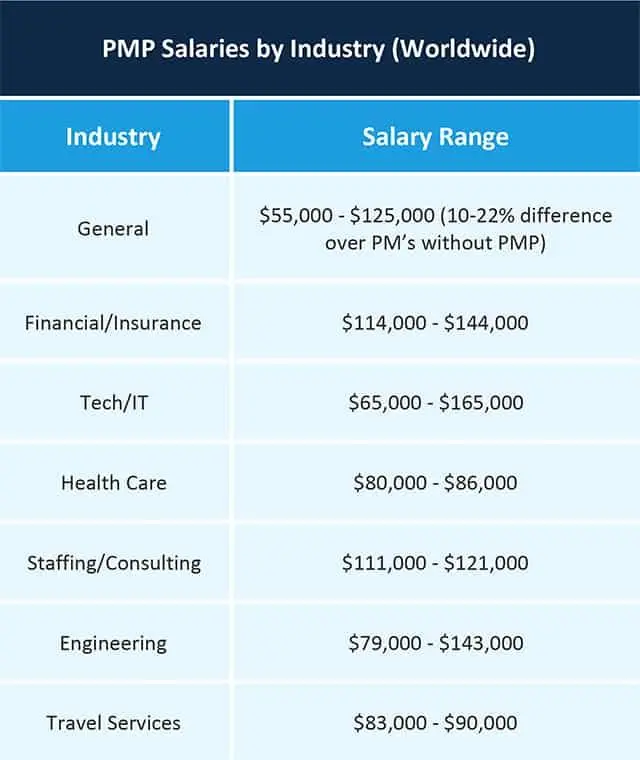
Also, PMP certification helps in improving the project success rates. According to a recent report, Organizations with PMP-certified managers deliver projects on time and within budget 76% of the time.
Are you preparing for the PMP certification exam? If yes, then check this YouTube video:
What is the Eligibility for Doing PMP Certification?
There is an eligibility criterion for getting PMP® certification. The PMI PMBOK (Project Management Body of Knowledge) is a reference book for the PMP® exam. Anyone can become a certified professional in PMP® if they pass the exam and certify the professional standards. The time commitment and cost of education, though, may add up quickly. In addition to doing what is best for one's job, one should also consider their life and finances.
The eligibility requirements are divided into two categories:
- Category 1 - Candidates with having graduation degree
- Category 2 - Candidates having a diploma
Let's get into detail
Category 1: Candidates having graduation degree
- Graduates must have 4500 hours, three years, and 36 months of distinct (non-overlapping) project management experience accumulated during the eight years immediately preceding the application.
- "Non-Overlapping" means that just one of the several projects that a PMP® aspirant manages during a given period will contribute toward their experience.
- The participant must provide documentation of at least 36 months of work experience across the usual project management life cycle as part of the PMP® application procedure. Starting, Planning, Executing, Monitoring and Controlling, and Closing are part of the project management life cycle.
- 35 contact hours of formal project management education.
Category 2: Candidates having a diploma
- 7500 hours, 5 years, and 60 months of distinct (non-overlapping) project management experience within the eight years preceding the application.
- "Non-Overlapping" means that just one of the several projects that a PMP® aspirant manages during a given period will contribute toward their experience.
- The participant must provide documentation of at least 60 months of work experience spanning the usual project management life cycle as part of the PMP® application process. Starting, Planning, Executing, Monitoring and Control, and Closing.
- 35 contact hours of formal project management education.
These requirements show that the candidates should possess both the practical experience and formal education necessary to become a certified PMP professional.
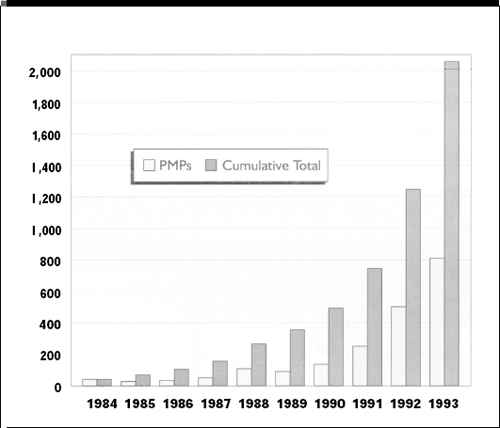
Also, there was a study done in 1995, which showed that 27.4% of respondents indicated that PMP certification helps them secure their position as a project manager.
| Year | Number PMPs | Cumulative Total | Percent of total |
|---|---|---|---|
| 1984 | 43 | 43 | 2.1 |
| 1985 | 28 | 71 | 1.4 |
| 1986 | 35 | 106 | 1.7 |
| 1987 | 51 | 157 | 2.5 |
| 1988 | 109 | 266 | 5.3 |
| 1989 | 90 | 356 | 4.4 |
| 1990 | 138 | 494 | 6.7 |
| 1991 | 253 | 747 | 12.3 |
| 1992 | 502 | 1249 | 24.4 |
| 1993 | 811 | 2060 | 39.4 |
This study was done so back in time. Then also, PMP certification had so much importance, guess now?
A recent report says that PMP certification has gained a positive reputation amongst project managers, as well as, HR managers and recruiters. It has become a very crucial credential that one must have.
Table 2: Benefits of PMP certification for a project manager
| Item | Frequency |
|---|---|
| Eaiser Job Search | 13 |
| Requirement | 10 |
| Affirmation of Knowledge | 7 |
| Provided a Sense of Accomplishment | 5 |
| Credibility | 4 |
| Affirmation of Abilities | 4 |
| Job Security | 3 |
| Self Assessment Tool | 4 |
What are the Advantages and Disadvantages of a PMP Certification?
Many individuals wonder whether the certification of PMP is worth the time and money or not. On one hand, individuals see it as a game changer for their career growth and advancement, while others hesitate due to cost and time.
If there are lingering doubts, then attending PMP boot camps can provide much clarity. These boot camps help in getting all the information and insights about the certification process, preparation strategies, and real-world benefits.
Let's break it down and explore some of the pros and cons of this certification.
Advantages of PMP Certification
1. Higher earning potential
One of the greatest advantages offered by this certification is the potential increase in the project managers' pay. Many studies have shown that project managers with a certification of PMP earn much better than non-certified ones. This is how crucial and life-changing this credential can be. Also, there are PMP® training institutes that help candidates in their preparations by providing them with various courses.
2. Gain global recognition and industry credibility
Every individual in the corporate world strives to get that recognition and credibility. The good news for everyone is that this certification is recognized globally and gives the industry credibility that most individuals need in their professional journey.
Moreover, individuals can benefit from adding the qualification to their resume regardless of their professional background or field.
3. Master essential project management skills
In the employment market, there are a lot of project managers. How to stand out from the crowd in such a situation? Why not achieve it by earning PMP® certification? Your resume becomes more appealing to employers as a result. More importantly, PMP® certification gives you the knowledge and teaches you the critical abilities you need to succeed in the workplace.
Disadvantages of PMP Certification
1. The cost aspect
The biggest disadvantage of this certification is that it's a little more costly than other certifications in project management. The usual cost of this certification is around 550 USD for non-PMI members. However, for PMI members the cost for taking the exam is around 405 USD.
2. Requires dedication and time commitment
There is indeed a monetary expense but the cost of time, however, is the more significant issue for most individuals. They stress over the number of hours needed to get PMP® certified. It has to do with preparing itself to some extent. Individuals must dedicate some time each day to watch our PMP® videos because the exam is challenging. Most folks concur that they need to practice questions as well.
Conclusion
PMP certification is a valuable credential worldwide that can help enhance a project manager's career by increasing their earning potential, improving project success rates, and also providing recognition globally.
While this certification can be a considerable investment of time and money, the long-term benefits actually outweigh these concerns. If as an individual, someone is really serious about their career growth, and gaining industry credibility then PMP certification is worth every penny.
Still unsure if PMP is worth it or not? Join PMP boot camps from reputed institutes and gain clarity and insights to make an informed decision.
Frequently Asked Questions (FAQs)
1. Is it necessary to have PMP certification?
If someone as a project manager wants to grow in their field and gain higher recognition then PMP certification can add value to your portfolio.
2. Is PMP necessary for project managers?
PMP is not obligatory for project managers but it is widely recognized and respected in the industry.
3. How many questions are there in the PMP exam?
The PMP exam consists of 180 multiple-choice questions with the time limit of 230 minutes (3.5 hours).
Explore Our Latest
Insights

Stay updated with our recent blog posts.
Explore Our
Course Gallery

Discover a diverse range of courses designed to elevate your skills and knowledge.

