DMAIC Methodology
Master the Define, Measure, Analyze, Improve, and Control framework to solve business problems systematically.
Master Lean Six Sigma methodologies to streamline processes, reduce defects, and drive continuous improvement across projects and business operations. Learn DMAIC, root cause analysis, quality management, and process optimization through practical, industry-aligned training.

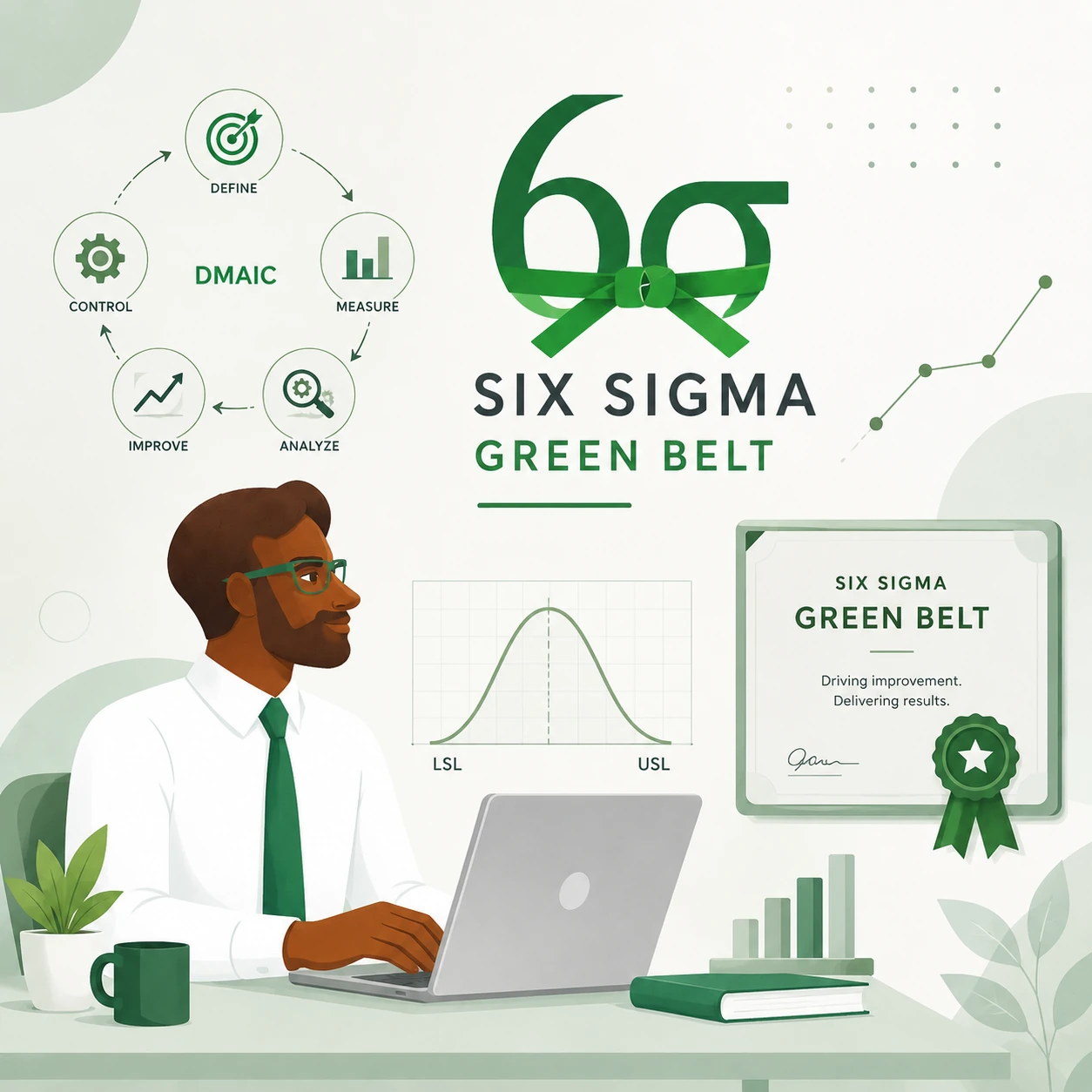

Master Lean Six Sigma methodologies, process improvement techniques, and quality management tools through practical learning designed to help professionals drive operational excellence and business transformation.

Learn the Define, Measure, Analyze, Improve, and Control (DMAIC) framework to systematically solve business problems and improve process performance.
Identify inefficiencies, eliminate bottlenecks, and streamline workflows using proven Lean Six Sigma process improvement methodologies.
Master tools such as Fishbone Diagrams and 5 Whys to uncover the true causes of defects and operational challenges.
Understand quality management concepts and best practices to improve customer satisfaction and organizational performance.
Use data analysis techniques and performance metrics to make informed decisions that support continuous improvement initiatives.
Learn to identify and eliminate waste across business processes to improve efficiency, productivity, and resource utilization.
Apply Six Sigma concepts through real-world examples, business scenarios, and hands-on exercises designed for practical learning.
Develop the skills required to lead continuous improvement projects and foster a culture of operational excellence.
Build job-ready Six Sigma Green Belt competencies that help professionals contribute to quality improvement and business growth initiatives.
Build practical process improvement and quality management skills through structured Lean Six Sigma training designed to help professionals drive operational excellence and business performance.
Master the Define, Measure, Analyze, Improve, and Control framework to solve business problems systematically.
Learn to visualize workflows, identify inefficiencies, and optimize business processes for improved performance.
Use tools like Fishbone Diagrams and 5 Whys to identify the underlying causes of defects and process issues.
Develop expertise in waste reduction, value stream improvement, and operational efficiency enhancement.
Apply proven quality management techniques to improve consistency, customer satisfaction, and business outcomes.
Analyze process data, performance metrics, and key indicators to support informed decision-making.
Build the skills needed to lead and sustain continuous improvement initiatives across teams and organizations.
Learn structured approaches to identify challenges, evaluate solutions, and implement effective improvements.
Gain hands-on knowledge of industry-standard Six Sigma tools used for quality control and process optimization.

 Understanding Lean Six Sigma Fundamentals
History and Evolution of Six Sigma
Lean vs Six Sigma Methodologies
Roles and Responsibilities of Green Belt Professionals
Overview of Continuous Improvement Frameworks
Understanding Business Problems
Voice of Customer (VOC)
Critical to Quality (CTQ) Requirements
Project Charter Development
SIPOC Diagrams
Stakeholder Analysis
Process Mapping Techniques
Value Stream Mapping
Data Collection Planning
Measurement System Analysis
Baseline Performance Measurement
Key Performance Indicators (KPIs)
Root Cause Analysis Fundamentals
Fishbone (Cause & Effect) Diagram
5 Whys Technique
Pareto Analysis
Process Bottleneck Identification
Failure Mode & Effects Analysis (FMEAs)
Introduction to Lean Thinking
The 8 Types of Waste (DOWNTIME)
Process Flow Improvement
Workplace Organization (5S)
Kaizen Principles
Value-Added vs Non-Value-Added Activities
Solution Identification Techniques
Brainstorming & Prioritization Methods
Process Redesign Strategies
Risk Assessment
Pilot Testing & Validation
Improvement Implementation Planning
Control Plans
Standard Operating Procedures (SOPs)
Process Monitoring Techniques
Visual Management Tools
Continuous Improvement Frameworks
Change Management Best Practices
Pareto Charts
Histograms
Control Charts
Scatter Diagrams
Run Charts
Check Sheets
Process Capability Concepts
Understanding Process Metrics
Performance Analysis Techniques
Business Impact Measurement
Cost of Poor Quality (COPQ)
Decision-Making Frameworks
Improvement Tracking Dashboards
Manufacturing Process Improvement Case Study
Service Industry Improvement Case Study
Business Operations Optimization Project
End-to-End DMAIC Project Execution
Project Presentation & Review
Certification Readiness Assessment

Gain industry-recognized process improvement and quality management skills that help organizations reduce waste, improve efficiency, and achieve operational excellence through Lean Six Sigma methodologies.
Designed for professionals who want to build process improvement, quality management, and continuous improvement skills through Lean Six Sigma methodologies.

Hear from professionals who turned their MS Project training into better project outcomes, career growth, and leadership opportunities.
Find answers to common questions about Lean Six Sigma Green Belt Certification training.
Lean Six Sigma Green Belt Certification is a globally recognized credential that validates your ability to apply Lean Six Sigma methodologies, improve business processes, reduce waste, and drive continuous improvement initiatives within organizations.
This certification is ideal for project managers, quality professionals, operations managers, business analysts, process improvement specialists, team leaders, and professionals looking to advance their careers in quality management and operational excellence.
No mandatory prerequisites are required. However, basic knowledge of business processes, quality management, or project management can help learners better understand Lean Six Sigma concepts.
You will learn DMAIC methodology, process mapping, root cause analysis, Lean principles, waste reduction, quality management techniques, data-driven decision-making, continuous improvement strategies, and Six Sigma tools.
DMAIC stands for Define, Measure, Analyze, Improve, and Control. It is the core problem-solving framework used in Six Sigma to identify process inefficiencies, implement improvements, and sustain results.
The certification helps professionals develop highly sought-after process improvement and quality management skills, making them valuable candidates for leadership, operations, quality assurance, and business excellence roles.
Yes. Lean Six Sigma Green Belt Certification is recognized worldwide across industries including manufacturing, healthcare, IT, finance, logistics, telecommunications, and service sectors.
Lean Six Sigma combines Lean principles focused on waste reduction with Six Sigma methodologies focused on reducing defects and process variation, resulting in improved efficiency and quality.
Yes. Upon successfully completing the training and meeting the certification requirements, you will receive a Lean Six Sigma Green Belt Certification that validates your knowledge and practical skills.
Lean Six Sigma professionals are employed across manufacturing, healthcare, information technology, banking, finance, supply chain, retail, telecommunications, consulting, and government sectors.
The duration varies depending on the learning format, but most professionals can complete the training and certification requirements within a few weeks while balancing their work commitments.
EduHubSpot provides industry-aligned curriculum, practical learning, expert-led training, real-world case studies, flexible learning options, and comprehensive support to help professionals master Lean Six Sigma methodologies and achieve career success.


