Python Programming
Develop strong coding skills using Python for data analysis, automation, and machine learning.
Build a strong foundation in Data Science, Python Programming, Machine Learning, and Deep Learning through a practical, hands-on learning experience. This Data Science Foundation Training equips you with the skills to analyze real-world datasets, build predictive models, automate data workflows, and generate AI-powered insights that drive smarter business decisions.

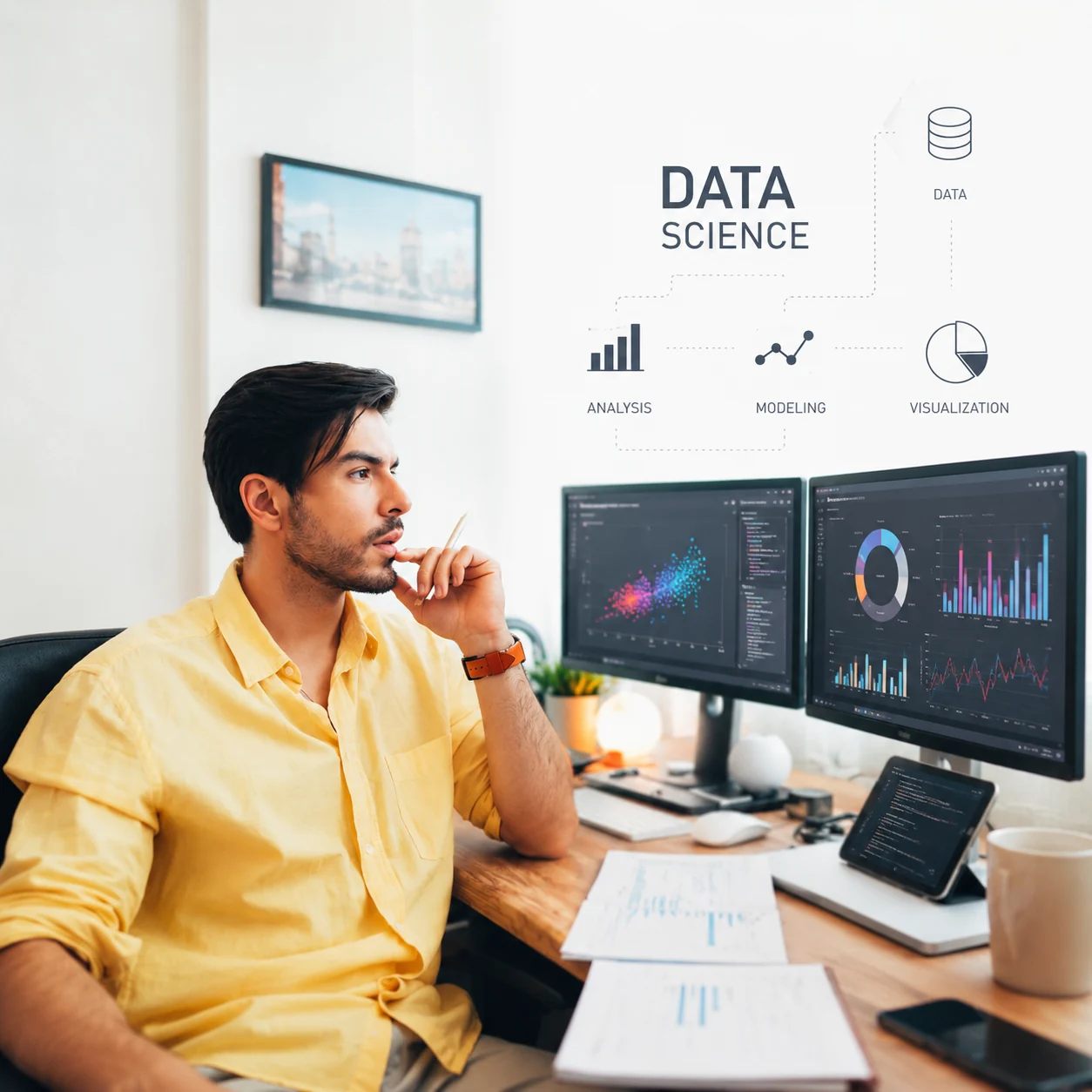

Develop practical data science skills through hands-on projects, real-world datasets, and industry-focused learning that prepares you for modern AI and analytics careers.

Master Python fundamentals, data structures, functions, object-oriented programming, and essential libraries used in data science.
Learn how to clean, transform, explore, and analyze structured and unstructured datasets using industry-standard techniques.
Create compelling visualizations and dashboards using Matplotlib, Seaborn, and other Python visualization libraries.
Understand supervised and unsupervised learning algorithms to build predictive models and solve business problems.
Explore neural networks, deep learning architectures, and modern AI applications such as image recognition and natural language processing.
Apply your learning through practical projects using real business datasets across multiple domains.
Leverage artificial intelligence techniques to uncover insights, automate workflows, and improve business decision-making.
Learn model validation, performance metrics, hyperparameter tuning, and optimization techniques to improve prediction accuracy.
Gain hands-on experience with the complete data science lifecycle—from data collection and preprocessing to model deployment and reporting.

Build the programming, analytics, machine learning, and AI skills required to become a successful data science professional.
Develop strong coding skills using Python for data analysis, automation, and machine learning.
Prepare, clean, and transform datasets for accurate analysis and predictive modeling.
Identify patterns, trends, correlations, and anomalies using statistical and visualization techniques.
Create insightful charts, graphs, dashboards, and reports that communicate business insights effectively.
Build regression, classification, clustering, and predictive models using modern machine learning algorithms.
Understand neural networks, deep learning frameworks, and AI applications for solving complex problems.
Apply descriptive statistics, probability, hypothesis testing, and data interpretation techniques.
Measure, validate, optimize, and improve model performance using industry best practices.
Generate actionable insights using machine learning and AI to solve real-world business challenges.

 Python basics: variables, data types, operators, and control flow
Functions, modules, and coding best practices
Hands-on exercises to build confidence
NumPy arrays and numerical computing foundations
Pandas for data loading, cleaning, and transformation
Working with CSV/Excel/JSON datasets
Visualisation with Matplotlib and Seaborn
Exploratory data analysis (EDA) and pattern discovery
Communicating insights through charts and storytelling
Descriptive statistics and probability foundations
Hypothesis testing and interpreting results
Preparation for machine learning concepts
Supervised VS unsupervised learning concepts
Feature engineering and train-test split
Model evaluation basics and metrics
Regression and classification models
Model training with Scikit-learn workflows
Avoiding overfitting/underfitting with evaluation
Clustering techniques and use cases
Dimensionality reduction basics (e.g., PCA)
Finding structure and segments in data
Cross validation and hyperparameter tuning
Pipelines, feature selection, and optimisation
Improving accuracy and robustness
Neural network basics and activation functions
Forward/backpropagation concepts
When to use deep learning VS ML
TensorFlow/Keras workflow: layers, epochs, and batches
Training, validation, and improving performance
Building your first neural network model
CNNs for image recognition use cases
RNNs for sequences and time-series problems
Real-world NLP and vision applications
Problem definition and data collection
Preprocessing, modelling, evaluation, and reporting
Deployment basics and business impact storytelling
Master job-ready data science skills through practical learning, real-world projects, and industry-relevant AI technologies.
Designed for learners who want to build strong foundations in Python, data science, machine learning, and AI while preparing for high-growth careers in analytics and intelligent technologies.

Hear from learners who turned their data science training into stronger analytics skills, better projects, and career growth.
Find answers to common questions about Data Science Foundation Training.
The Data Science Foundation Training program is a beginner-friendly course that teaches Python programming, data analysis, machine learning, deep learning, and AI concepts through practical, hands-on learning.
This course is ideal for students, fresh graduates, working professionals, aspiring data scientists, business analysts, software developers, engineers, and anyone looking to start a career in data science.
No. The course starts with Python fundamentals, making it suitable for beginners with little or no programming background.
You'll learn Python, the most widely used programming language for data science, machine learning, automation, and artificial intelligence.
Yes. The course covers supervised learning, unsupervised learning, predictive modeling, neural networks, and foundational deep learning concepts.
You'll work with popular libraries used in data science, including NumPy, Pandas, Matplotlib, Seaborn, and machine learning libraries.
Yes. Practical exercises and projects use real-world datasets to help you build hands-on experience in solving business problems.
Absolutely. You'll learn data cleaning, transformation, feature engineering, preprocessing, and exploratory data analysis techniques.
The course builds job-ready skills that prepare you for roles in Data Science, Data Analytics, Business Intelligence, Machine Learning, AI, and Analytics.
Yes. The structured learning path makes it ideal for beginners, career changers, and professionals from non-technical backgrounds.
Yes. You'll learn the complete lifecycle—from data collection and preprocessing to machine learning, model evaluation, and business insight generation.
EduHubSpot's Data Science Foundation Training combines Python programming, machine learning, deep learning, AI concepts, real-world datasets, and hands-on projects to help learners build practical, industry-ready data science skills for the modern workforce.

