- Review the project plan.
- Negotiate with stakeholders to reconsider priorities.
- Make a note of the impact on cost baseline, impact on schedule baseline, quality, risk and dependencies.
- Include effective measures to achieve control.
7 Proven Ways to Stop Scope Creep
(and What Really Causes It)


Table of Contents
Share This Article

Imagine a scenario where a homeowner is planning to renovate their house with a neat blueprint, a planned budget, and a move-in date. After completing the half-renovation, the homeowner decides to add a swimming pool, home theatre, and a chef's kitchen without adjusting the budget or the move-in time. Sounds absurd, right? Yes, this is the same as the situation when the project experiences scope creep.
Scope creep is the rampant expansion of the goals of a project beyond the initial plan. It takes place when new features, needs or changes in the control process are included without planning. When it is left uncontrolled, it may lead to a budget overspread, missed deadlines or even project failure.
This blog explores the main reasons for scope creep and the effective ways to avoid this problem from imperilling projects. Let's explore by defining the concept of scope creep.
What is Scope Creep in Project Management?
Scope creep is the unauthorised addition of functions, features or uncontrolled expansion of the scope of a project, without any change in the control process. Now, the changes refer to:
- Inclusion in the project's needs.
- A sudden alteration in client requirements.
- New features for a product.
These changes may hamper the project schedule, budget, and costs, and may compromise the accomplishment and goals.
Usually, scope creep takes place during the new project requirements added by the clients or after the start of the project. It refers to the uncontrolled expansion of project scope without adjustments to time, budget and resources. Often, these alterations are not reviewed properly. Therefore, the team has to finish the tasks and deliverables with the same resources and at the same time.
Due to these unanticipated changes to the original plans and project schedule, various construction companies may miss their deadlines, and clients may experience financial loss.
Reasons for Scope Creep
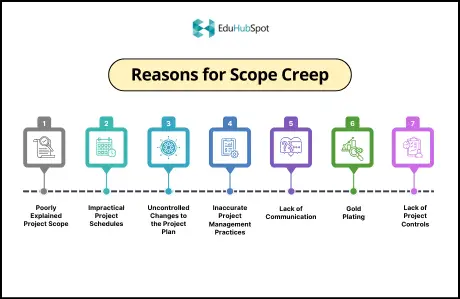
The predominance of the scope creep situation comes from clients who have no idea about defining their requirements properly. There are several reasons for the scope creep, which are as follows:
Poorly Explained Project Scope
A well-explained project scope acts as the roadmap of a successful project. If the scope is not clear, it will fail the project plan. Moreover, as the project objectives and deliverables are not perfectly calculated, a domino effect will lead to an incorrect estimation of time, budgets and resource needs. This will cause a scope creep.
Impractical Project Schedules
When deadlines are too tough, teams often stress execution over thorough planning. This quick approach resulted in shortcuts and compromised quality as the team struggles to meet the deadlines. With the progress of the project, these issues become apparent and lead to rapid changes and revisions. Therefore, unplanned execution leads to scope creep and strains resources and timeframes.
Uncontrolled Changes to the Project Plan
Introducing changes to the project plan without using any control methods or formal change requests will result in scope creep. This is because of the changes in the project timeline, budgets and resource allocation.
Inaccurate Project Management Practices
Another major factor that causes scope creep is the lack of assembled process. When there are no standardised protocols, the course of the project will become jumbled and distracted. For example, if the project management practices are not rigorously followed, managers cannot track the project metrics, which will increase the chance of scope creep.
Lack of Communication
One of the major causes of scope creep is the misalignment between stakeholders as a result of unclear communication channels. When stakeholders are not united, there is a high chance of scope creep. For example, if a client asks for ad hoc alterations and the project manager misinterprets them, the final output will differ from the original. This miscommunication will result in project delays and rework.
Gold Plating
Gold plating is the situation when the team is adding extra features without being asked. It doesn't cause scope creep directly but leads a delayed and jumbled projects. Incorporation of unnecessary features results in scope creep and eats up the timeline and budget.
Lack of Project Controls
The lack of project controls leads the teams to derail from the track of the project scope baseline for several reasons. Project managers must develop different procedures or use tools or project management software for the team's progress and project KPIs.
How Does Scope Creep Impact a Project?
Even though scope creep is usually considered adverse, there are certain situations which may allow adjustments to the original plan. Projects which span several years often meet rapidly changing client requirements or changes in market conditions, which can support the expansion of the scope of the project. Here are the following ways to explain the scope creep's impact on a project.
Raised Costs
To fulfil the new needs, scope creep leads to the requirements of more workforce, time and resources. The project expenses may increase because of this.
Expanded Timelines
Various added features or activities result in long project timelines. This leads to extending the project longer to finish, and could have effects on other projects which depend on the quick completion of the project.
Project Failure Risks
By conceding project goals, timelines and budgets, scope creep can increase the risk of project failure.
lack of Focus
When there is a continuous change in project requirements, team members may become confused about the initial goals of the project. This lack of focus might hamper the development and make it tough to yield the desired result.
Rigid Stakeholder Relationships
Scope creep puts team members and other stakeholders under stress. The team and the overall organisation may lose their credibility because of scope creep, unfulfilled expectations and budget constraints.
Resource Rigidity
Controlling scope creep can put pressure on the materials of the project, equipment and human resources. A team may work more than a certain level, which can lead to lower output, more pressure and even exhaustion.
Real-World Examples of Scope Creep
Let's discuss the real-world example, which serves as a cautionary tale and throws light on the dangers of scope creep and the disruption because of this issue can jumble even well-laid plans. Here are the best three cautionary examples:
Sydney Opera House: A Significant Case of Scope Creep
The iconic Sydney Opera House is a wonder of modern architecture, which stands as evidence of human creativity and invention. The original project was planned by Jorn Utzon within a modest budget and timeline. But behind this stunning architecture, there was a story of scope creep.
Challenges:
- Continuous changes in design.
- Complicated engineering needs.
- Political involvement.
Result:
- An extended timeline beyond the initial estimation.
- A shocking increase in cost.
The Sydney Opera House offered a reminder of how uncontrolled scope creep can transform a well-planned project into a financial and logistical disaster.
Denver International Airport: A Scope Creep Takeoff
The Denver International Airport was planned to be a state-of-the-art airport construction project. The original budget and timeline were fixed but inadequate. However, it ultimately became a case of scope creep and mismanagement.
Challenges:
- Changes in design.
- Technical issues.
- Labour disputes.
Result:
- Huge cost overrun.
- Extended timeline.
- Stakeholders and the public were left annoyed and exasperated.
Thus, Denver International Airport shows how scope creep can break down even the most ambitious project if it is uncontrolled.
Healthcare.gov: The Online Portal Troubled by Scope Creep
Healthcare.gov aimed to be an online portal for the Affordable Care Act in the US. The plan was to provide a seamless and user-friendly platform to access online healthcare plans. But due to the scope creep, it became an ill-fated launch.
Challenges:
- Shortage of clear requirements.
- Rapid-changing regulations.
- Rushed implementation timeline.
Result:
The website launch was marred because of performance issues, crashes and a huge public outcry.
Therefore, healthcare.gov shows how scope creep in software development can boost technical breakdowns, loss of trust and reputational damage.
7 ways to avoid Scope Creep
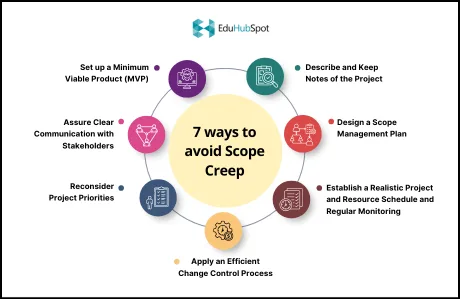
Despite having a clear idea about scope creep, the client's uncontrolled and last-minute changes can still distract from the outcome. Therefore, it is important to consider the methods to prevent scope creep in the initial stages of project planning. Here are the 7 ways to prevent scope creep:
1. Describe and Keep Notes of the Project
The initial and vital step to prevent scope creep is to clearly outline and document the project scope. It includes figuring out the project objectives, deliverables, deadlines and limitations in detail.
Every detail should be noted to offer clarity to stakeholders and design realistic expectations. Also, the document should include success criteria, resource needs and project constraints.
Consider a web development project where the scope will define the initial objective, such as the delivery of a fully functional website. The deliverables include the final website and other important features such as a contact form and e-commerce functionality. Also, the document will mention the timeline, budget and team responsibilities to ensure everyone is associated.
2. Design a Scope Management Plan
For this, a scope management plan is designed to highlight how the project scope will be explained, approved and managed to avoid the scope creep and ensure a successful project delivery.
It develops a tracking system, a level of approvals and workflow, and how the project will be performed and a structured approach to manage the change request.
3. Establish a Realistic Project and Resource Schedule and Regular Monitoring
Developing a realistic project and resource schedule is important to prevent scope creep. It includes reckoning for project complexity, resource availability and potential limitations to allocate teams effectively.
A well-planned schedule reduces the stress of accommodating last-minute changes.
Regular monitoring of the project and resource schedule helps to figure out risks, delays or resource constraints to allow managers to address issues actively.
4. Apply an Efficient Change Control Process
Project managers should develop a well-planned change control process to manage scope modifications efficiently.
It will highlight how the change requests should be submitted, monitored and approved.
Each request should include complete information about the potential impact on deadlines, budgets and resources.
The structured control process helps to manage stakeholders' expectations by offering a transparent approach to handling changes.
It ensures the project's integrity, minimises confusion and rescues the scope creep risks.
5. Reconsider Project Priorities
It is important to reconsider project priorities such as review scope, schedule and cost baselines regularly to ensure the project stays associated with its objectives.
It helps managers to discover scope deviations and assess their effects on resources, deadlines and budgets.
Project managers can also reference the project and resource schedule against the baseline scope to ensure the review of critical aspects.
These regular assessments will keep the project focused on important aspects, ignoring unnecessary scope extension.
6. Assure Clear Communication with Stakeholders
Both internal and external communication are important for successful project management. Therefore, project managers should develop a strategic communication plan to collaborate with stakeholders for efficient project scope management.
Constant communication helps project managers disclose the scope creep, exchange feedback and share ideas to get projects back.
It helps managers to negotiate changes, convince stakeholders to reduce scope creep, extend timelines and provide feedback.
7. Set up a Minimum Viable Product (MVP)
Developing a minimum viable product from the beginning can offer stakeholders focus, without overbearing their creativity. With an MVP, an individual can set up a prioritisation of features; therefore, everyone is clear about their initial tasks and additional features.
Final Thought
Changes are vital in any project as the client's requirements continuously change. But uncontrolled changes offer significant risks for any project, and the client's requests are also difficult to manage. Therefore, setting up measures to avoid, discover and review those changes is critical.
It is stated that a good project manager can feel scope creep, and a better project manager can establish an action plan to accept or deny the scope creep.
Project managers need to be watchful of the early signs of scope creep. For example, small demands can change the direction of the entire project. Therefore, managers need to be mindful of any change, be it minor or insignificant.
Thus, by incorporating the appropriate strategies, project managers can minimise the risks associated with unmanageable scope expansion.
Frequently Asked Questions (FAQs)
What is scope creep?
A scope creep is the uncontrolled changes in the scope of a project. It often takes place when new requirements are included without altering resources, budgets or timelines.
What is the reason for scope creep?
Major causes include incomplete project needs, poor communications between team members and stakeholders, changing priorities, shortage of change-control processes.
What are the challenges of scope creep?
The main risks for scope creep are the overruns of budget, missed deadlines, poor quality deliverables and damaged reputations.
What should an individual do if scope creep has already started?
If the scope creep has already started, an individual should:
Who is responsible for handling scope creep?
Usually, the project manager is responsible, but it needs collaboration across the team, stakeholders and clients.
Explore Our Latest
Insights

Stay updated with our recent blog posts.
Explore Our
Course Gallery

Discover a diverse range of courses designed to elevate your skills and knowledge.

