Project Management Office (PMO):
Why it's essential for business success

The value of a Project Management Office (PMO) was previously doubtful, but it has recently been implemented in a number of organizations. According to the PMI Pulse of the Profession reports, over 80% of businesses maintain some form of PMO, but implementation rates vary by industry and region.


Table of Contents
Share This Article
The value of a Project Management Office (PMO) was previously doubtful, but it has recently been implemented in a number of organizations. According to the PMI Pulse of the Profession reports, over 80% of businesses maintain some form of PMO, but implementation rates vary by industry and region.
The role of project management has changed over the past decade. The PMO serves as a central hub for project governance and ensures it is executed efficiently. It is highly crucial for firms to understand the responsibilities and roles of a PMO to help improve project delivery, improve efficiency, and help achieve the overall business objectives.
The structured framework and governance model of a PMO add value to the project. This enables repeatable processes and leverages insights from past projects for future success. So, another key component is repetition to ensure that previous decisions help make better solutions for future projects.
What is a Project Management Office (PMO)?
The Project Management Office (PMO) is a centralized team or department dedicated to standardizing and improving project management practices. It is the backbone that helps align company strategies with project goals to ensure that all projects are executed consistently and efficiently. By standardizing processes, the PMO helps improve communications, make reporting more accurate, and increase overall strategic project management.
Importance of PMO for delivering a successful project
The Standard for Project Management states that projects are a 'part of a system for value delivery within organizations.' PMOs are part of this system and play a key role in successful project delivery:
- Aligns projects with strategic direction: One of the primary functions of the Project Management Office (PMO) is to ensure that all projects align with the organization's strategic objectives. This means they need to understand the overall business strategy, translate it into actionable goals, and then align the project results with these goals. As per a study, organizations with PMOs saw over a 64% improvement over others.
- Outcome-oriented capabilities: The Project Management Office (PMO) focuses more on the project's benefits than just the output. This means they need to set clear goals, define success metrics, and develop the right skills to deliver the project on time.
- Foster continued improvement: PMOs are essential for consistently implementing best practices. Efficient PMOs help spread project results across the organization to share valuable insights from each project and improve the process for future project development.
- Helps manage resources: The Project Management Office (PMO) optimizes the process of resource allocation, such as tools, personnel, and finances. This ensures that the projects are appropriately staffed, leading to efficient execution.
- Risk management in projects: Proactive managing risks is essential when executing projects. A PMO must identify, analyze, and mitigate such risks throughout the project cycle to ensure no errors arise.
Different types of Project Management Office (PMO)
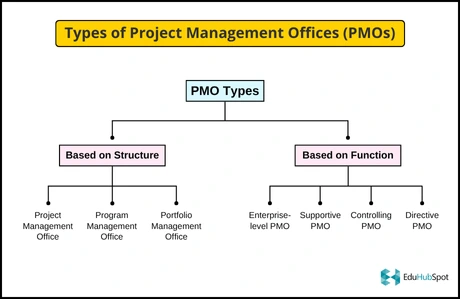
The concept of Project Management Office (PMO) has been divided into multiple types based on the function and level of the organization.
A. Based on the function
- Enterprise-level PMO: Responsible for aligning Project Management Office tasks with the overall goals and strategies of the organization. It helps align the project strategies with the objectives of the organization.
- Supportive PMO: This type of PMO supports and guides project managers. They help create a proper framework of processes, training modules, governance, and mentoring programs that support project managers in daily operations. This type of PMO generally acts as a consultative entity.
- Controlling PMO: This type enforces the project management standards in the entire organization. Their main tasks are identifying potential issues and risks, monitoring progress, and approving project plans.
- Directive PMO: This is the decision-making body that controls the working of projects. Directive PMOs may have authority over project governance, including assigning managers and approving plans; however, execution ownership remains with the project team.
B. Based on the Scope
- Project Management Office: This mainly focuses on supporting project managers and their teams in delivering projects successfully. It offers the best practices, guidance, tools, and templates to improve consistency and efficiency.
- Program Management Office: This oversees multiple related projects that align with a specific goal or program. Their focus is mainly on interdependencies among different projects, solving conflicts, and ensuring that the project achieves its goals.
- Portfolio Management Office: They oversee the portfolio of multiple projects and programs in the entire organization. Their primary tasks include the allocation of resources, monitoring the performance of multiple programs, and prioritizing projects based on the objectives.
What are the benefits of having a Project Management Office (PMO)?
Project Management Office (PMO) is an integral part of organizations because it also helps deliver projects within schedule and budget. However, there are more reasons why having a PMO is a bonus for organizations. They include:
- Enabling real-time visibility across the organization: PMOs help replace fragmented reporting systems with centralized dashboards and real-time project data systems. This means that the department can collect data directly from its originating source and help make it visible to the stakeholders. The department also helps streamline communication, increase project tracking, and empower project managers, team members, and executives with updated insights that improve the entire organization's efficiency.
- Reduction in project resource costs: A PMO department plans and allocates the right resources for the right project at the right time. This means that it minimizes the need for last-minute recruitment, thereby reducing the overall cost of the project. Also, as the right resources are allotted from the start of the project, it means that the project is completed on time.
- Optimized utilization of resources: PMOs can help track the demand for resources and forecast both billable and non-billable utilization. This way, they can mobilize resources from both and work strategically. Also, PMOs can check if a resource is being under- or over-utilized and take the proper measures to ensure the optimal utilization of resources. This helps increase productivity and reduce employee burnout.
- Supports the decision-making process: The role of PMOs includes tracking major KPIs and forecasting metrics that support the project, resources, risks, and more. These reports help stakeholders assess project health, allocate resources appropriately, and help align the project with strategic goals. So, the PMO's data-driven approach helps identify trends and issues to help improve the decision-making process and remove any bottlenecks.
- Capacity planning due to market volatility: PMOs work at the capacity planning level to help forecast any excess or shortages in resources due to changes in the market. It helps build an optimized workforce that is not affected by market volatility. Also, PMOs can create a mix of permanent and temporary employees to help meet the future needs of a project. This helps reduce costs and makes the business mitigate the risks faster.
Top Project Management Office (PMO) Trends
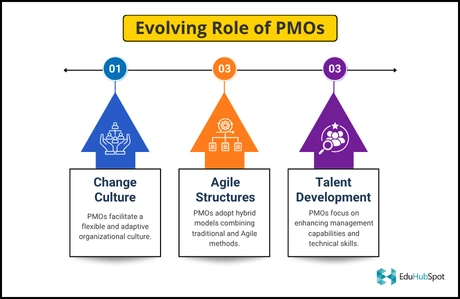
- The growth of PMO enables a 'change culture' in organizations: Project Management Office (PMO) is now being recognized as the facilitator of change in an organization. This also highlights the organization's shift from a rigid to a more flexible approach to help manage projects efficiently. Additionally, they take a proactive role in organizational change but in a strategic and well-aligned manner.
- Rise of agile PMO structures: PMOs are now integrating Agile methods to help meet the need for faster delivery and responsiveness of projects. As a result, PMOs are now utilizing hybrid models that combine traditional project management practices with modern Agile principles.
- Fostering talent: PMOs are focused on improving management capabilities and enhancing technical skills such as leadership development, strategic thinking, and stakeholder management.
Want to excel as a project manager? Check out this video to understand why a PMP certification can help you master PMO and excel in your organization.
Conclusion
The Project Management Office (PMO) helps drive project success, keeping organizational efficiency in mind. It includes multiple roles and responsibilities that align with the organization's overall goals and improve the project management process. As a result, the role of a PMO department in today's ever-evolving organizational environment is indispensable.
Explore Our Latest
Insights

Stay updated with our recent blog posts.
Explore Our
Course Gallery

Discover a diverse range of courses designed to elevate your skills and knowledge.

