What is Continuous Improvement
in Agile? A Complete Guide

Learn about continuous improvement in Agile project management. Discover practices, techniques, benefits, and how to implement continuous improvement in your Agile team.


Table of Contents
Share This Article
Introduction
The term "continuous improvement" is often used in the context of quality assurance and process improvement.
If you're thinking of introducing a continuous improvement to your agile team, there are a few things to keep in mind. First, it's important to get buy-in from all team members. Without everyone on board, it will be difficult to make continuous improvement part of your team's culture.
Second, start small and focus on one area at a time. Trying to make too many changes at once can be overwhelming and lead to frustration. Finally, be patient and don't expect results overnight. Making continuous improvement part of your team's DNA takes time and effort, but it's worth it in the long run.
What is continuous improvement?
Continuous improvement is the ongoing process of making improvements to the way we work, with the aim of increasing efficiency and effectiveness.
There are many ways to approach continuous improvement, but one of the most effective is through the use of Agile principles and practices. By constantly evaluating our processes and making small changes, we can gradually improve the way we work, resulting in greater efficiency and effectiveness over time.
While continuous improvement may seem like a lot of work, it's actually quite simple to implement in your Agile process. All it takes is a little bit of planning and attention to detail, and you can start seeing improvements in no time! And also by joining our PMI-ACP boot camps you can get insights of the same.
Why is continuous improvement important in agile?
Continuous improvement is important in agile because it helps us to identify and address areas of our process that are not working as they could be. By constantly looking for ways to improve, we can make sure that our process is always evolving and getting better.
In addition, continuous improvement helps to create a culture of continuous learning, where we are constantly striving to improve our skills and knowledge. This continuous learning culture is essential for agile teams, as it helps us to adapt and respond to change quickly and efficiently.
How to do continuous improvement in agile?
There are a number of ways to go about continuous improvement in agile, but one of the most important things is to always be looking for ways to improve and then take action on those improvements.
One way to continuous improvement is to hold retrospective meetings at the end of each sprint. During these meetings, the team can take a look at what went well during the sprint and what could be improved. This is a good opportunity to identify areas where processes can be streamlined or where there might be gaps in knowledge.
Another way to continuous improvement is to always be on the lookout for ways to automate tasks. This can free up time for more important things and help to reduce errors.
Finally, it's important to encourage a culture of continuous improvement within the team. This means creating an environment where everyone is comfortable proposing and implementing changes. It also means having the willingness to experiment and learn from mistakes.
What are some continuous improvement practices in agile?
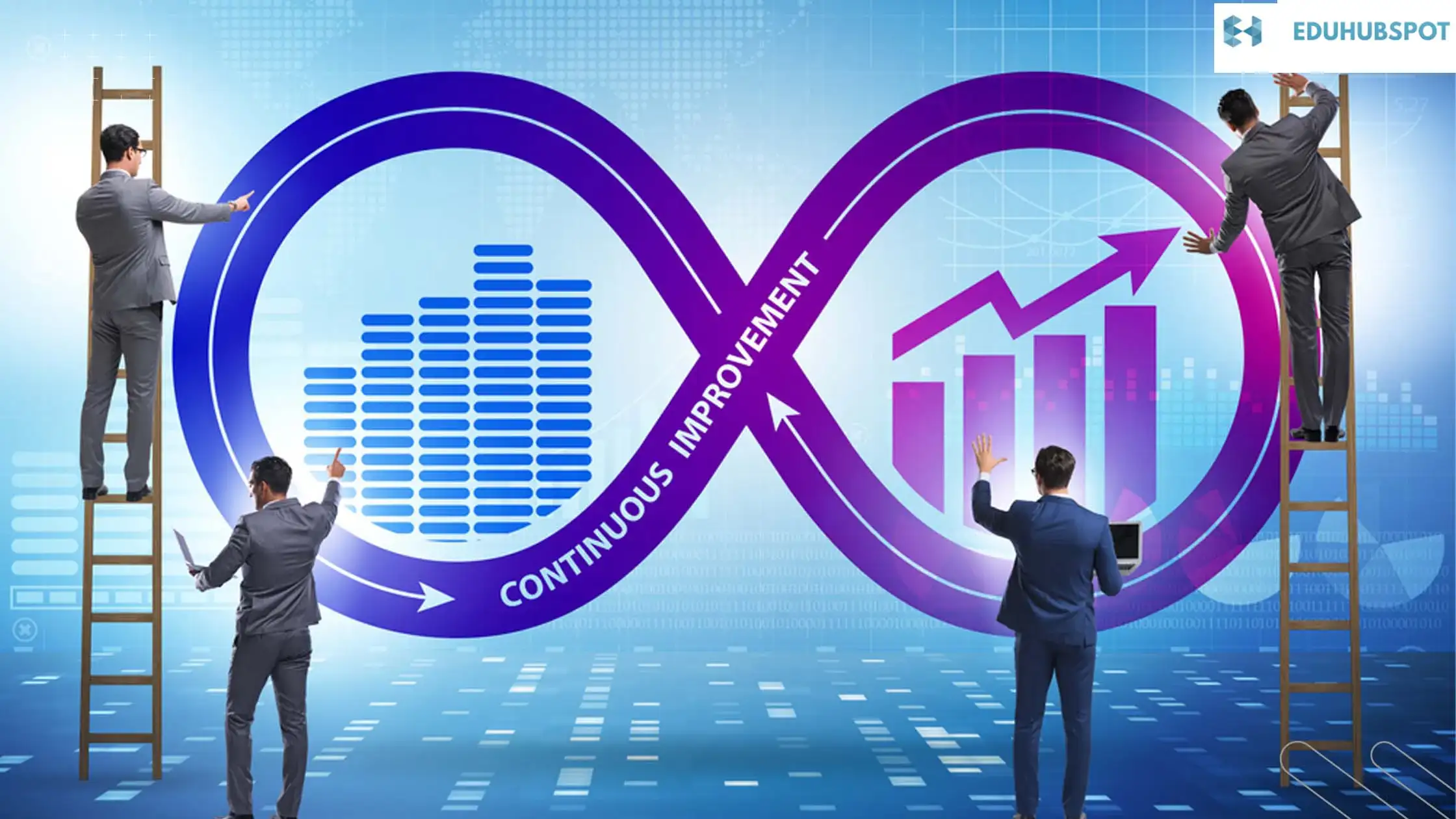
Continuous improvement is a cornerstone of the agile philosophy. The idea is that by constantly striving to improve, we can make our processes more efficient and deliver better results to our customers. There are many different ways to approach continuous improvement, but some common practices include:
- Process improvement is a challenging process. Identifying potential improvements can be difficult for some teams, but there are strategies that help make this task easier and more successful than ever before! One way you could use your organization's retrospectives would involve holding them on an annual basis or less frequently as needed (depending upon what type of work needs doing). This gives all members the chance to share ideas about how they think things could operate better; it also provides valuable feedback from those who already understand.
- To improve an organization, you need more than just good ideas. You also have to be able to share them across teams so that everyone can see what's possible and make it happen! There are many ways for this kind of communication - here's how some free or inexpensive options might work: internal discussion forums; practitioner presentations called lunch learns where someone shares their learnings with others in the field (these could even serve as teaching tools); lean coffee sessions where people come together at pre-set times every week simply because they want help bringing about positive change within themselves & each other through open dialogue on topics such as leadership skill sets needed today.
- It is important to capture your improvements so that they may be retained over time. One way of doing this would involve creating documents and managing them in a documentation repository or simply sharing folders with others, capturing the learnings on an open wiki page for easy access through different devices like phones & computers etc., describing how you are evolving process using processes reporitories1516and even employing expert systems17 which can generate new code for adding into the source control system.
- Organizing communities of practice (CoPs) and guilds are a great way for companies to learn from each other. There's no one-size fits all approach when it comes to how organizations should work, so if you have an idea that could help your company grow or make life easier then consider setting up some sort of CoP!
- The Centers of Excellence are a great way to leverage your company's resources and hire people who have the necessary skills. They can also support transformation efforts by providing guidance on how best to adopt new technologies or techniques, such as agility practices like lean software development methodologies!
- Implementing agile and lean techniques is not a one-size fits all solution. The right approach for your organization will depend on the size, and complexity of tasks that need to be completed by employees as well as their level in experience with these types of methods or toolsets already implemented within an enterprise environment (eager beginner vs seasoned pro). To ensure improvement efforts are successful it's important to monitor analytics such as KPIs which provide insight into where improvements can potentially lead us toward achieving goals more efficiently while avoiding wasting resources along our journey
How continuous improvement can be executed?
The idea of continuous improvement is quite simple, but it can be difficult to put into practice. PDCA (i.e., Plan-Do-Check-"act") provides an effective model for businesses because these four steps help ensure that any tasks or projects are completed successfully with less time wasted along the way!
- PLAN
- DO
- CHECK
- ACT
This first step of the process involves deciding on an issue and then examining ways in which you can solve it. This includes asking questions like:
- What do I want?
- Is there a way for us (the group) to accomplish this goal together?),
- How might we get from here [point A]to there?)
- Lastly – but most importantly--you have set up your strategy so that everyone knows what's going on at every stage throughout each project!
When you want to take your strategy one step further, this is the perfect place for doing so. You can utilize these steps in order to execute an innovative idea or try out something unique on a smaller scale without fear of failure because there are no major implications if it doesn't work! The best part about experimentation? We'll record all our measures taken during the procedure and get feedback from participants as well - That way we'll have plenty of data points going forward which should help make future decisions easier than ever before
It's important to assess the outcomes of your strategy, in order for you to make adjustments if needed. This can be done by asking yourself questions such as: -Was it efficient? Did everything work out according to plan?" And so on…
You should always be looking for ways to improve your company and every day is a good opportunity. It's easy when you have completed all of these steps, but it doesn't stop there! The new resolution will be put into practice until we find out what else can make life better at work or home or both places simultaneously if possible :)
Benefits of Continuous Improvement
1. Increased efficiency and effectiveness: Continuous improvement helps us to work more efficiently and effectively by constantly looking for ways to optimize our processes.
2. Improved quality: By constantly striving to improve the quality of our work, we are able to deliver better products and services to our clients.
3. Enhanced team morale: When team members feel that their work is constantly improving, it can lead to enhanced morale and a greater sense of satisfaction.
4. Increased customer satisfaction: Ultimately, continuous improvement leads to increased customer satisfaction because it results in better products and services.
5. Improved bottom line: When done correctly, continuous improvement can lead to cost savings and improved profitability for businesses.
What are some continuous improvement techniques?
There are many tools and techniques that can be used for continuous improvement in Agile software development. Some of the most popular ones include
Lean software development: This approach focuses on eliminating waste and increasing efficiency in the software development process.
Six Sigma: This is a quality management technique that aims to reduce defects and improve overall quality.
Kanban: This is a method of visualizing workflow and balancing capacity with demand.
Continuous integration: This is the practice of integrating code changes into a shared code repository frequently, typically multiple times per day.
Test-driven development: This is a software development methodology in which tests are written before code, and code is only written to pass the tests.
These are just a few of the many tools and techniques that can be used for continuous improvement in Agile software development. The key is to find the ones that work best for your team and your project and to continually strive to improve the way you work.
What is the connection between continuous improvement and agile?
In agile software development, the continuous improvement includes improving our processes and practices, as well as our tools and techniques. By continually improving our working methods, we can ensure that we are always delivering the best possible software to our customers. In addition, continuous improvement helps us to stay ahead of the curve and maintain a competitive edge.
There are many different techniques that can be used in continuous improvement, but some of the most popular ones include process mapping, process improvement teams, value stream mapping, and Kaizen events. These techniques all have their own unique benefits, but they all share the common goal of helping organizations to work more effectively. This, in turn, leads to better-quality software and happier customers. continuous improvement is not a one-time event; it is an ongoing journey that we should all be on.
What are the challenges of continuous improvement?
Continuous improvement is a never-ending journey that requires continuous effort, dedication, and commitment. The biggest challenge of continuous improvement is sustaining the momentum required to keep moving forward. It can be easy to get complacent and fall into a comfortable routine, but it's important to always be looking for ways to improve and become more efficient and effective.
Final Words
Continuous improvement can be achieved through a number of different methods, such as retrospectives, root cause analysis, and continuous delivery. By implementing continuous improvement strategies, we can ensure that our projects are always moving forward and that we are constantly learning and improving as a team.
Explore Our Latest
Insights

Stay updated with our recent blog posts.
Explore Our
Course Gallery

Discover a diverse range of courses designed to elevate your skills and knowledge.

