How Process-Based Management Can Lead to
Scalable Project Success?

Learn how process-based management (PBM) can lead to scalable project success. Discover PBM principles, benefits, implementation strategies, and real-world case studies.


Table of Contents
Share This Article
Project success today is not just about meeting deadlines and budgets but also about implementing frameworks that enable scalability and adaptability. Here comes the role of process-based management (PBM). Process based management (PBM) is a strategy not only for the smooth running of the operations but also for further development and growth.
If you are a pro-level project manager, or you are someone who is setting out for PMP exam preparation, the concept of PBM is what should be taken into consideration to transform your practices. This blog will help you deep dive into various aspects of PBM and how you can implement the same.
What is Process-Based Management?
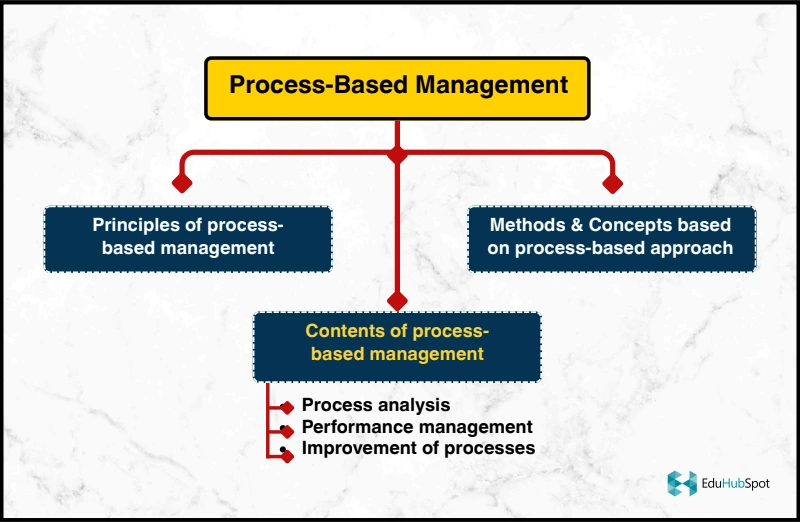
Process-based management (PBM) focuses on aligning a company's aspects in such a way that all its parts, inclusive of the processes, can operate effectively to achieve goals and cut costs. Unlike traditional project management where the focus is on tasks or functions, PBM ensures to emphasize the processes as the backbone of an organization's performance.
Key Characteristics of PBM:
- Standardization: Establishes uniform procedures to ensure that the achieved result will be of the same quality across all projects.
- Efficiency: Eliminates redundancies, optimizing resource allocation and enhancing productivity.
- Continuous Improvement: Encourages ongoing assessment and enhancement of processes for further growth.
- Alignment with Goals: Makes sure that all the processes are in tune with the goals or already set targets of the organization.
For the ones seeking to pursue PMP certification, the PBM principles are integral and paramount. Also, reflecting the standardized processes found in the PMBOK Guide.
The Tangible Benefits of Process-Based Management
Implementing the theory of 'PBM' brings in practical results, while the stage of the real-life implementation is characterized by the effectiveness of the process all over the project business and the improvement of the real-life qualities of the organization.
Boosted Efficiency and Productivity
Organizations that implement PBM can have more profitable projects. Research also says that PBM can increase productivity by 50%, cycle time by 90%, and product quality by 80%.
Enhanced Team Collaboration
Process-based management assists in creating a collaborative team by clearly defining roles and responsibilities. A recent case study showcased that the use of a project management tool led to fewer meetings and more teamwork at a crane-building company; consequently, it boosted the company's operations considerably by being more efficient.
Improved Risk Management
With the usage of standardized procedures, risks are identified in advance, and the strategies for reducing such risks are much more effective. This proactive approach reduces the frequency of the project delays and the cost overruns.
Scalability for Growing Projects
When an organization expands, PBM helps in handling increased complexity while also maintaining the standard of excellence.
Implementing Process-Based Management: A Step-by-Step Guide
In order to implement process-based management principles, one needs to do thoughtful planning and execution. Here's how you can get started:
Step 1: Define and Document Your Processes
Analyse and document all the existing process flows of your organization. Find out the duplicate, redundant, and ineffective areas. The documentation of these processes is the very first step in the improvement.
Step 2: Leverage Project Management Tools
Employ project management tools to mechanize and supervise the processes. Smartsheet, for example, is a software solution that has been indispensable in improving the coordination and efficiency of projects at companies by enhancing transparency and accountability.
Step 3: Invest in Training and Development
Equip your team with the needed project management skills by giving them training people and assisting them with certifications. Investing in project management training is a growing trend. In fact, 61% of organizations at present are offering a course or training in project management.
Step 4: Monitor, Evaluate, and Iterate
Now, it's time to check if your processes are working. Expect that key performance indicators (KPIs) play a significant role in measuring success and identifying areas of improvement. This continuous feedback loop is crucial for maintaining efficiency.
Real-World Case Studies: How Companies Use Process-Based Management Successfully
Process-based management (PBM) isn't solely a management method—it's something valuable for firms who aspire to make process management more efficient, increase productivity potential, and raise the ability to be successful in the long run.
Countless business leaders have embraced PBM in order to improve effectiveness, diminish waste, and encourage creativity which in turn became a standard of the right project execution.
Let's see - how have Toyota and Google been able to employ PBM in order to really use it for its optimization?
Toyota: Lean Manufacturing & Process Optimization
Toyota has been leading the global car industry in terms of the effectiveness of its processes, and this is mainly because of its Lean Manufacturing System which is also called the Toyota Production System (TPS).
It is a company that uses a process-based approach according to which the following are executed:
- The prescribed workflows make the production consistency a rule.
- Continuous improvement (Kaizen) helps eliminate deficiencies and cut back on the costs of waste.
- Just-in-Time (JIT) production comes with the result only when the materials needed arrive on time, thus, cutting down on the inventory costs of excess items.
James P. Womack and Daniel T. Jones, authors of "The Machine That Changed the World" and "Lean Thinking", are widely recognised as pioneers in defining and popularising Lean principles. They analysed Toyota's production system and articulated the five core principles of Lean: value, value stream, flow, pull, and perfection.
Their work highlights how Toyota's success is rooted in its ability to:
- Define value from the customer's perspective.
- Map the value stream to identify and eliminate waste.
- Create a continuous flow of processes.
- Implement a pull system, where production is triggered by customer demand (JIT).
- Pursue perfection through continuous improvement (Kaizen).
Toyota was marked as one of the most dependable car manufacturing companies in the world because of its well-established process integration of PBM into core operations. This resulted in higher production efficiency, lower operational costs, and superior product quality.
Google: Workflow Standardization for Innovation
While Google is known for flexibility and innovation, its structured process management plays a key role in its success.
Google employs PBM principles as follows:
- Making use of OKRs (Objectives and Key Results) to monitor and evaluate progress and synchronize squads and companies with business objectives.
- Applying data/math to standardize workflows across the different departments.
- Introducing Agile and Scrum methodologies for speedy product development and constant improvement cycles is one approach among many.
According to PBM, Google has grown its teams, cut project duplications, and yet, the output has been on the top level while simultaneously is the home for a climate of creativity.
Key Takeaway for Project Managers
These case studies demonstrate whether you are in charge of a manufacturing plant or are in a tech startup, the process-based management implementation can provide the following:
- The best distribution of resources
- Optimized cooperation and effectiveness
- The highest quality results with the smallest risk
By adopting PBM, project managers can create a better-structured, functionally scalable, and highly effective project environment. This will thus set up the teams for long-term success.
Conclusion
Adoption of a process-based management approach is a strategic initiative that could result in the success of projects to be readily scaled. Standardizing processes, bettering collaboration, and paying attention to continuous improvement help companies to be able to set themselves up for sustained growth and stick to efficiency.
By integrating PBM principles, project managers will not only see the better outcomes of projects but also be able to meet the set competences in PMP certification. Continuing to grow in project management, even with all the changes it brings, will keep you close to the cutting edge of the industry if you are well-versed in such methodologies as PBM.
Frequently Asked Questions (FAQs)
How does process-based management improve project outcomes?
Process-based management holds the key to increase the efficiency and accuracy of processes, thus, to create a greater number of successful projects.
Is investing in project management training beneficial?
Yes, definitely!. The fact is that project management training is something that people are more and more interested in, with 61% of the companies reporting that they were providing project management training to their staff.
Can PBM be applied to small businesses?
Yes, after all, PBM is a concept that is easily adjustable and transferable to all entities, big or small, as a means of ensuring better compliance and productivity.
Explore Our Latest
Insights

Stay updated with our recent blog posts.
Explore Our
Course Gallery

Discover a diverse range of courses designed to elevate your skills and knowledge.

